Sodium silicate chemical grouting is a mature and widely applied chemical grouting technique in the fields of foundation treatment and waterproofing and leakage control. It is favored for its rapid setting, high efficiency, strong adaptability, and remarkable effects in leakage control and reinforcement.
This technology is extensively used in various complex scenarios such as mines, tunnels, dams, and underground projects. It utilizes sodium silicate (sodium silicate solution) as the core material, combined with specialized curing agents, to achieve soil reinforcement and the blocking of seepage channels through a dual-liquid mixing reaction, effectively addressing core issues such as loose foundations, engineering seepage, and quicksand hazards. This article will provide a detailed analysis of the core materials, reaction principles, commonly used curing agents, and application scenarios of sodium silicate chemical grouting.
1. Core Material: Basic Characteristics of Sodium Silicate
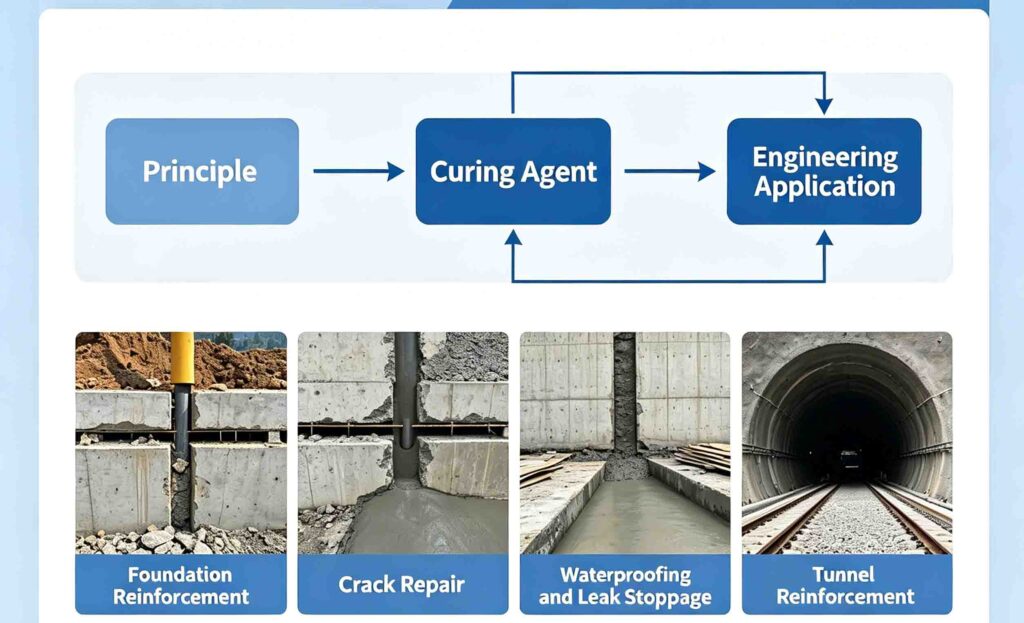
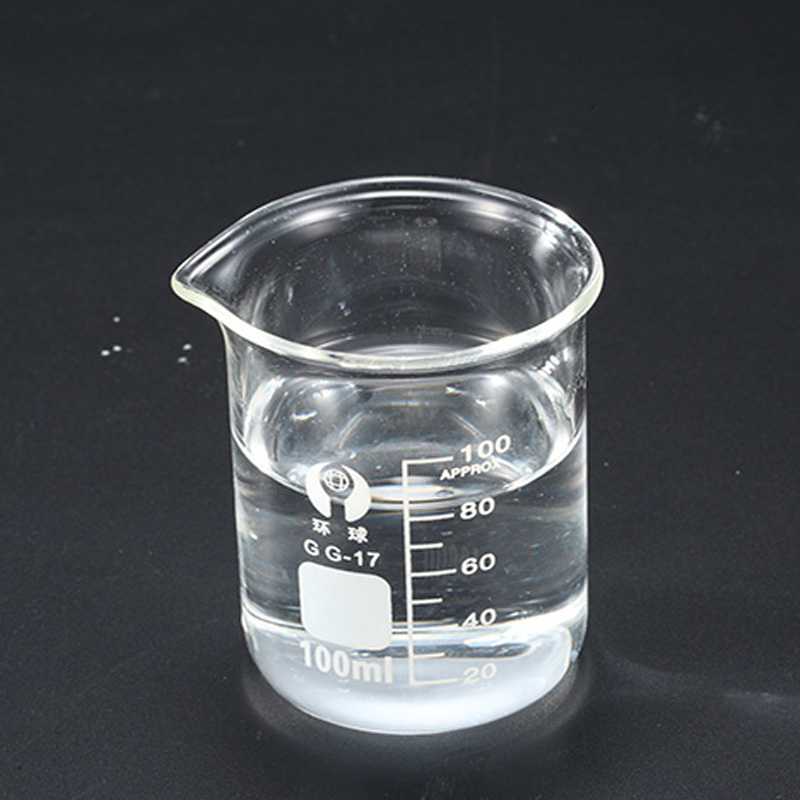
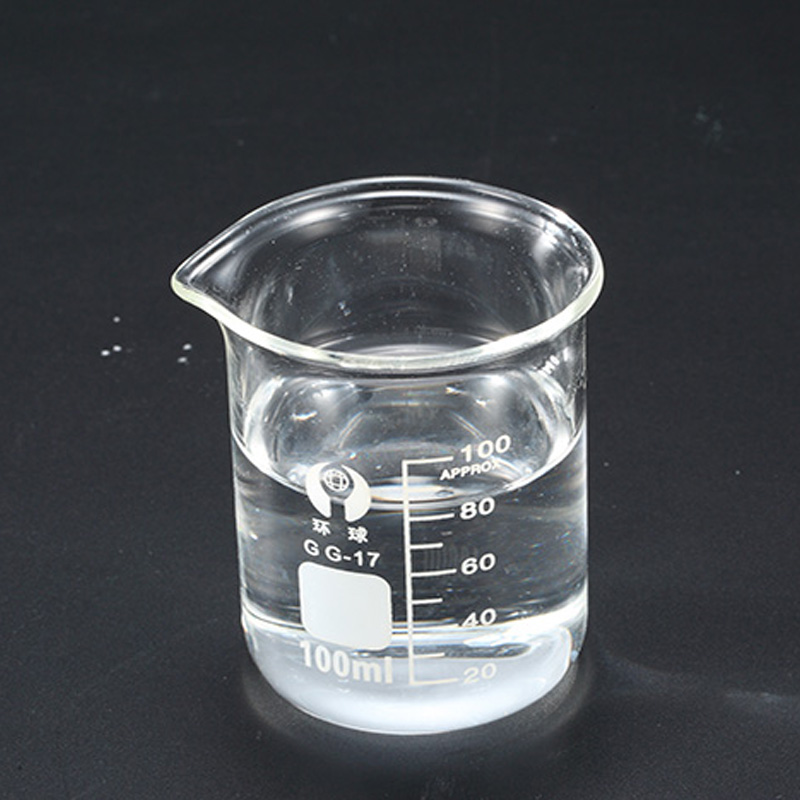
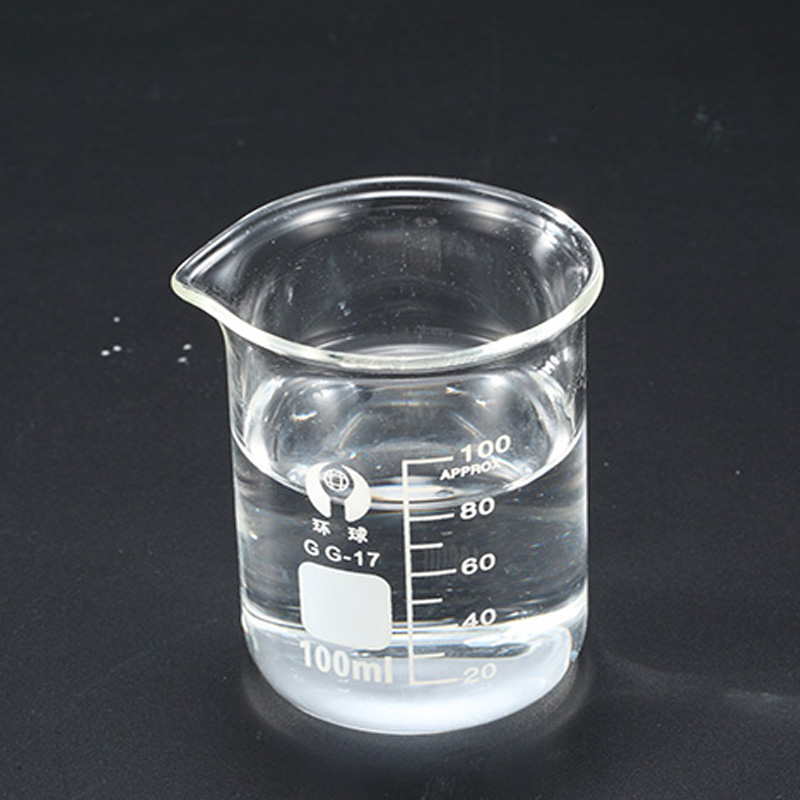
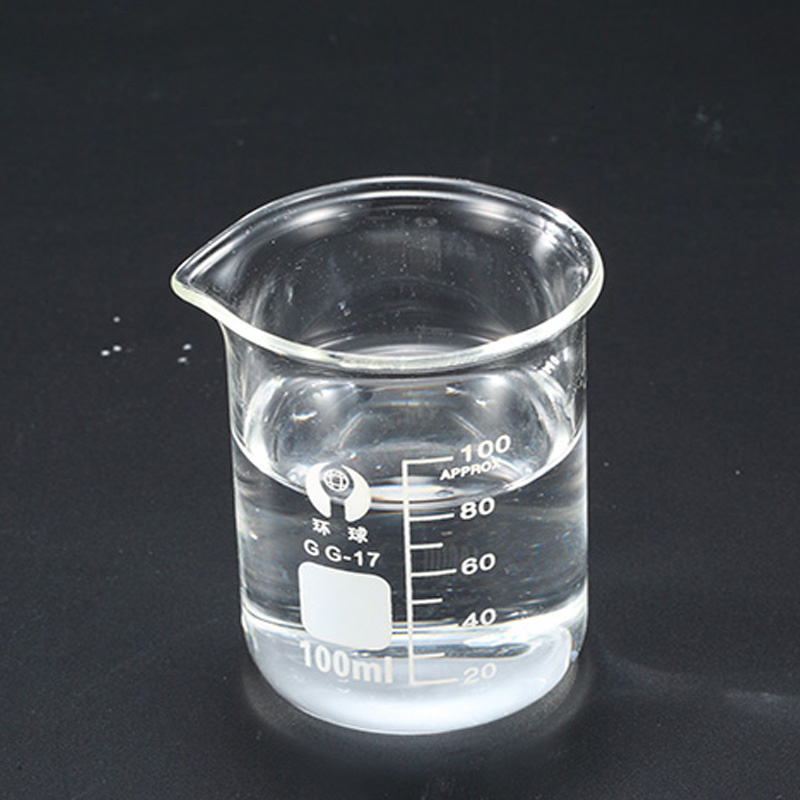
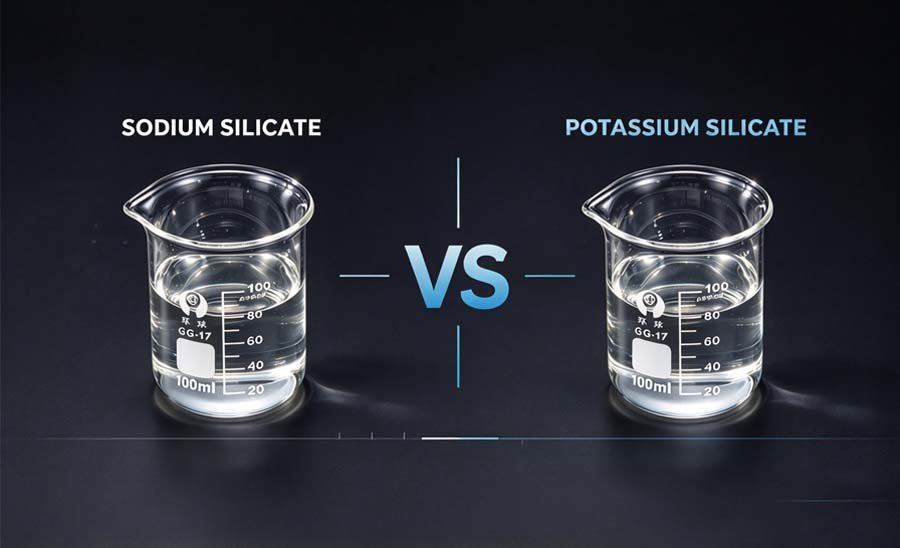
The core raw material of sodium silicate chemical grouting is sodium silicate, whose chemical name is sodium silicate solution. It usually appears as a colorless, bluish-green or brown viscous liquid. It has three core characteristics, providing a fundamental guarantee for the grouting effect.
Sodium silicate has extremely strong adhesive properties, capable of closely bonding with soil and rock particles. It is easily soluble in water, allowing for flexible adjustment of concentration to meet the permeability requirements of different strata. It is strongly alkaline and can undergo chemical reactions with various substances. Especially when mixed with specific curing agents, it can rapidly form silicic acid gel, which is the key to achieving stratum reinforcement and waterproofing and leakage control, and also the core advantage of water glass chemical grouting technology.
2. Core Principles and Construction Techniques of Sodium Silicate Chemical Grouting
The core of sodium silicate chemical grouting lies in the dual-liquid mixing reaction. Through the synergistic effect of sodium silicate solution and curing agent solution, it achieves efficient reinforcement and leakage plugging. The principle and construction process are simple and controllable, as detailed below:
(1) Core Reaction Principle
Sodium silicate chemical grouting adopts the two-component method. Sodium silicate solution (A liquid) and curing agent solution (B liquid) are mixed in a scientific proportion through a two-component mixer. After thorough mixing, a rapid chemical reaction occurs, generating silicic acid gel and corresponding salt products.
Among them, silicic acid gel has extremely strong adhesion and filling properties, which can quickly penetrate into the pores, fractures and seepage channels of the stratum. After the gel solidifies, it can firmly bond the loose soil and rock particles, and at the same time completely block the seepage channels, achieving the dual purposes of foundation reinforcement and waterproofing and leakage blocking. It is suitable for various complex geological conditions.
(2) Core Construction Techniques
The process of sodium silicate chemical grouting is standardized and highly controllable. The core steps are divided into three: Firstly, the sodium silicate solution (A solution) and the curing agent solution (B solution) are prepared separately and stored in independent slurry tanks to ensure that the two slurry solutions do not mix in advance.
Then, through the grouting pump, the two slurry solutions are respectively transported to the two-liquid mixer, where they are instantaneously and evenly mixed to ensure a full reaction. Finally, under a certain pressure, the mixed slurry is injected into the target stratum to ensure that the slurry penetrates every area that needs to be reinforced or sealed, avoiding the problems of reinforcement blind spots or incomplete sealing.
3. Types of Commonly Used Hardening Agents (B Liquid) for Sodium Silicate Chemical Grouting
The curing agent (Solution B) is a key accessory material for sodium silicate chemical grouting, directly influencing the reaction rate, gel performance, and engineering adaptability. There are mainly four types of inorganic curing agents commonly used in the industry, which can be flexibly selected according to the engineering requirements:
Calcium chloride: It features a fast reaction speed and the formed silica gel has good compactness and high bonding strength. It is suitable for rapid sealing of emergency water gushing and seepage in mines and tunnels, capable of instantly controlling the spread of water.
Sodium aluminate: The gel after curing has strong water resistance and good stability, making it suitable for long-term anti-seepage projects such as dams and embankments, and can enhance the anti-seepage capacity and durability of the stratum.
Phosphoric acid: The gel formed by reacting with sodium silicate has high strength and strong erosion resistance, making it suitable for reinforcement treatment in complex geological strata.
Sodium bicarbonate/sodium carbonate: The reaction rate is moderate, and the gel has moderate collapsibility, making it suitable for water stopping in sandy layers, effectively controlling the sand flow during excavation and ensuring construction safety.
4. Core Engineering Application Scenarios of Sodium Silicate Chemical Grouting
Based on its core advantages of rapid curing, efficient leakage sealing, and reinforcement and stabilization, sodium silicate chemical grouting is widely used in various geotechnical engineering projects, especially suitable for emergency scenarios that require rapid handling and complex strata. The core application scenarios are as follows:
(1) Rapid sealing and blocking of water gushing in mines and tunnels
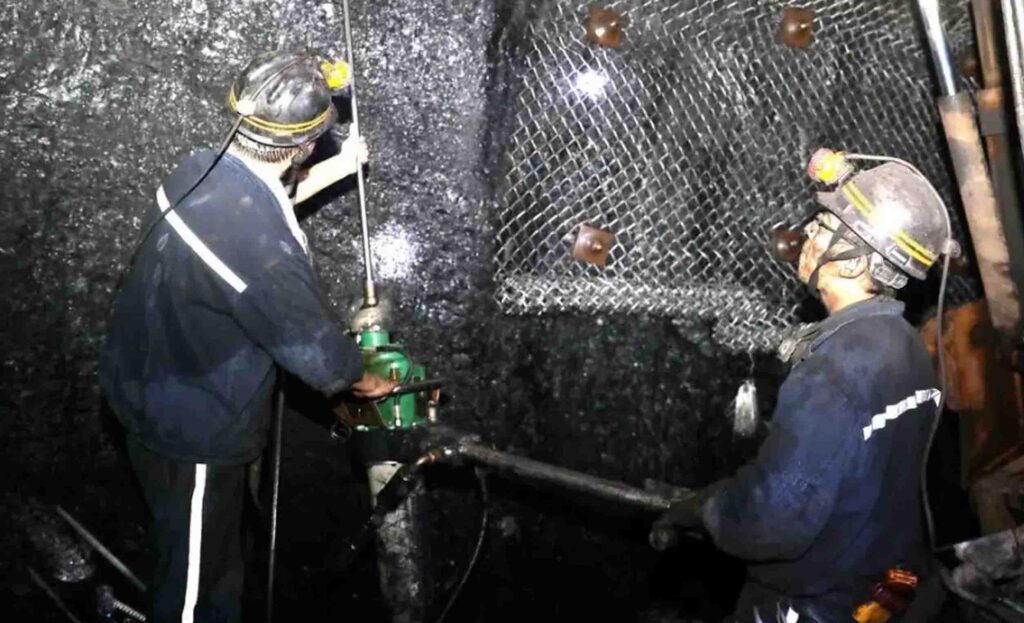
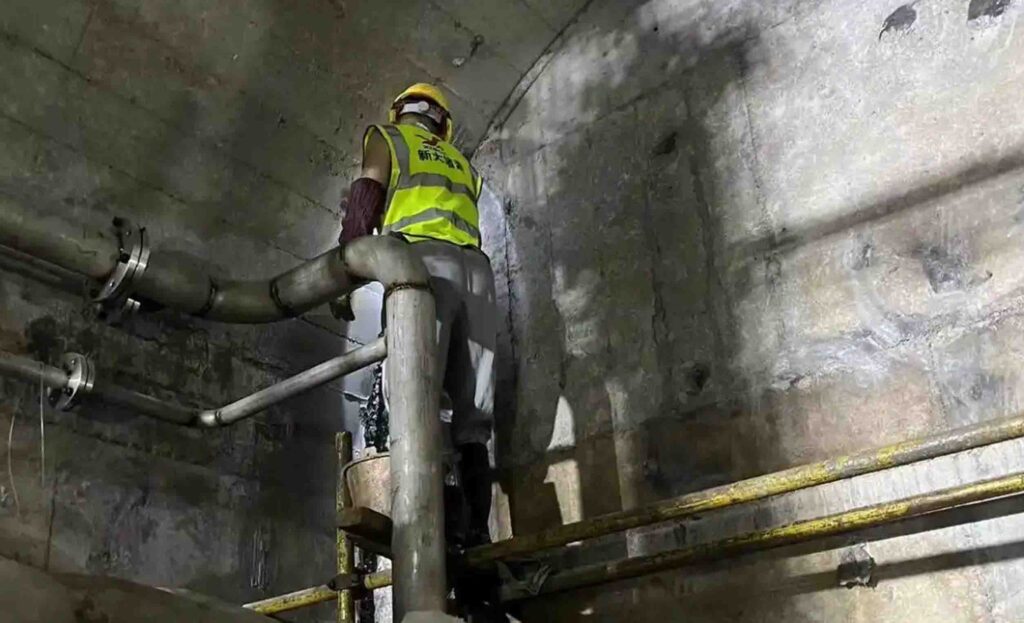
During the construction of mines, tunnels and roadways, sudden water gushing and seepage problems are prone to occur. If not dealt with promptly, they will endanger the safety of construction. With its rapid setting property, sodium silicate chemical grouting can be quickly injected into the water gushing and seepage points, instantly generating a solidified gel to block the seepage channels and control the spread of water, thus buying time for subsequent construction. It is the preferred solution for emergency leakage control in underground projects.
(2) Seepage Control Treatment of Dams and Embankments
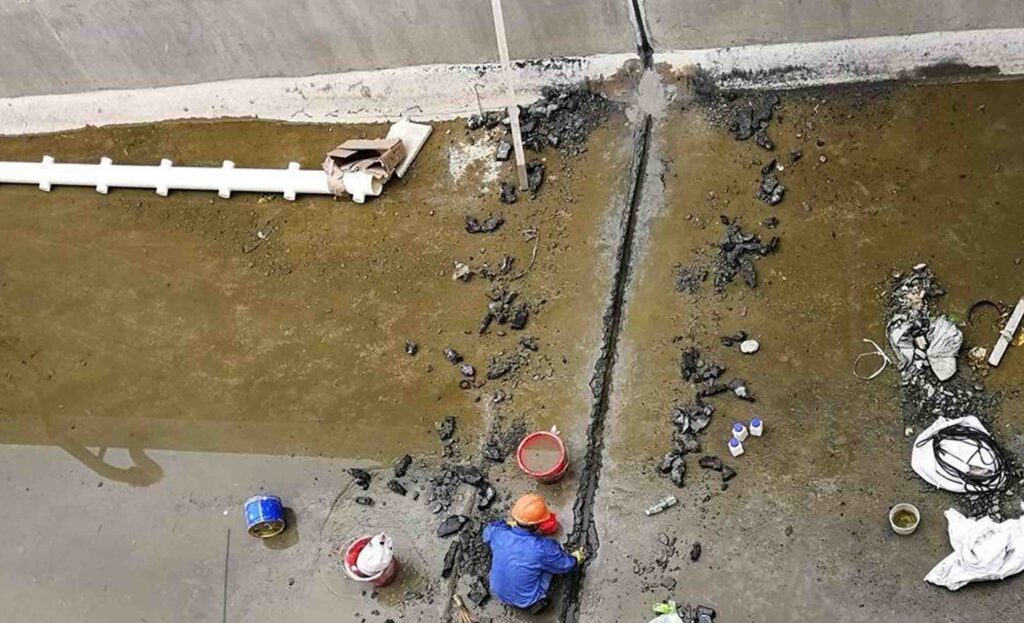
The dam foundation and abutments of dams and embankments are prone to seepage problems, which seriously affect flood control safety. By using sodium silicate chemical grouting, a seepage prevention curtain can be constructed in the seepage area. The solidified gel forms a dense seepage prevention barrier, which can effectively prevent the seepage of river water, reinforce the connection between the dam body and the foundation, and enhance the seepage resistance and structural stability of the dam and embankment.
(3) Treatment of Seepage and Leakage in Underground Engineering
Underground projects such as basements, water pools, and underground pipe galleries often encounter problems of seepage and dampness due to construction joints and stratum pores. Sodium silicate chemical grouting can be precisely injected into the seepage areas, filling the gaps and pores, blocking the seepage paths, and thoroughly solving the seepage and dampness problems in underground spaces, ensuring the normal use of underground projects.
(4) Water Sealing and Foundation Reinforcement in Sandy Soil Layers
During the excavation construction in the quicksand layer, the quicksand phenomenon is prone to cause the collapse of the excavation surface, affecting the construction safety. Sodium silicate chemical grouting can quickly solidify the quicksand, control the spread of quicksand, and simultaneously cement the quicksand layer, enhancing the bearing capacity of the foundation. It provides stable stratum support for projects such as building foundations and bridge pile foundations, preventing construction accidents.
In conclusion, sodium silicate chemical grouting technology has become a core technology in the field of foundation treatment and waterproofing and leakage control due to its mature process, flexible choice of curing agents, and significant reinforcement and leakage control effects. Centered on sodium silicate, it is suitable for various complex engineering scenarios, capable of solving urgent leakage control problems and achieving long-term reinforcement of the stratum, providing strong support for the safe and efficient advancement of various projects.
for more information ,please visit our facebook page