Tel: +86-13630079025 Wechat/Whatsapp:+86-13630079025 Email Address: sales@sanleechem.com

Sodium Silicate For Paper Industry
Sodium silicate, also termed water glass, is an essential inorganic auxiliary agent widely adopted in the paper manufacturing sector. Sodium silicate in paper making provides outstanding stabilizing, dispersing and reinforcing effects, serving core processes including pulp bleaching, waste paper deinking and wet-end papermaking to boost pulp brightness, protect cellulose fibers and improve paper uniformity.
Water glass for paper industry is supplied in two core forms to fit diverse production needs. Liquid sodium silicate for paper features easy dilution and uniform mixing, ideal for large automated production lines to optimize bleaching and surface sizing effects. In contrast, solid sodium silicate for paper boasts stable properties, low logistics costs and long shelf life, suitable for medium and small paper mills with flexible on-demand dissolution.
With technological progress, silicate applications in papermaking have been further extended. Beyond traditional auxiliary functions, it enhances paper tensile strength and water resistance, and is widely used for functional packaging and recycled paper, remaining a cost-effective, eco-friendly additive for the modern paper industry.
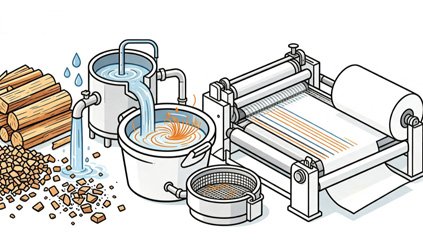
What Are Sodium Silicate for Paper Industry
Sodium silicate, also referred to as water glass, is a crucial alkaline inorganic chemical and high-quality soluble silica source for pulp and paper manufacturing. It possesses outstanding binder properties and reliable pH control ability, which are its core advantages for papermaking applications. This chemical can effectively stabilize the alkaline environment of pulp during production, protect cellulose fibers from damage, and significantly enhance the brightness of finished pulp. Meanwhile, its excellent bonding performance strengthens the adhesion between paper fibers, improving the structural firmness and overall quality of paper products.
Adaptable to diverse production scenarios, it is supplied in liquid and solid specifications to meet the demands of different production scales and storage and transportation conditions. Widely applied in pulp bleaching, waste paper deinking and paper strengthening processes, it serves as an economical, stable and multi-functional auxiliary material, playing a vital role in optimizing papermaking processes and improving finished paper performance.
01
Stable pH Control
As an alkaline inorganic chemical, sodium silicate efficiently regulates and maintains a stable alkaline environment in pulp systems. It prevents cellulose fiber degradation, optimizes hydrogen peroxide bleaching effects, and significantly improves pulp brightness and production stability.
02
Excellent Binder Performance
It delivers outstanding adhesive properties to strengthen the bonding force between cellulose fibers and inorganic fillers. This effectively enhances the tensile strength, structural firmness, surface smoothness and dimensional stability of finished paper products.
03
High-Quality Soluble Silica Source
Serving as a reliable soluble silica supplier in papermaking processes, it optimizes pulp physical properties, improves paper durability, and supports the production of high-quality and functional paper materials.
04
High Applicability and Cost-Efficiency
Offered in both liquid and solid forms, it adapts to diverse production scales, transportation and storage conditions. It is widely applicable for pulp bleaching, waste paper deinking and paper strengthening, providing stable performance with low comprehensive application costs.
Recommended Sodium Silicate Products for Paper Industry
To meet the diverse production, storage and transportation demands of papermaking enterprises, two mainstream sodium silicate specifications are widely recommended for the paper industry. Both versions retain the core functional advantages of pH adjustment, fiber bonding and pulp optimization, and are tailored to different production scales and process scenarios, providing targeted and cost-effective solutions for pulping, bleaching, deinking and paper strengthening processes.
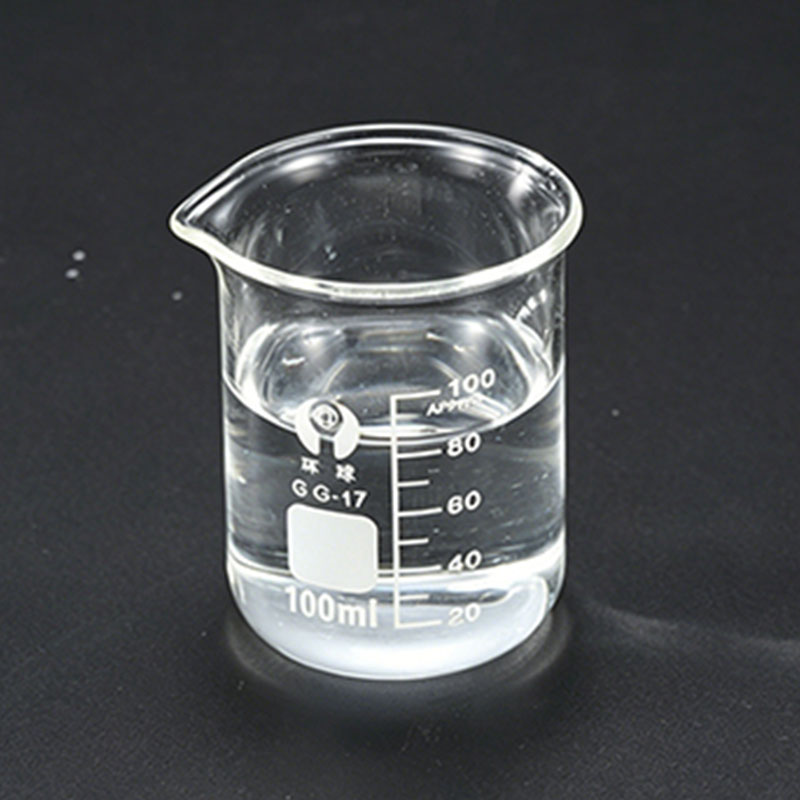
Liquid Sodium Silicate
A ready-to-use viscous aqueous solution suitable for large-scale, automated papermaking lines. It features easy pumping, uniform mixing and precise dosing, perfectly fitting continuous pulp bleaching, waste paper deinking and wet-end strengthening processes. It stably optimizes pulp brightness and paper surface performance with convenient operation.
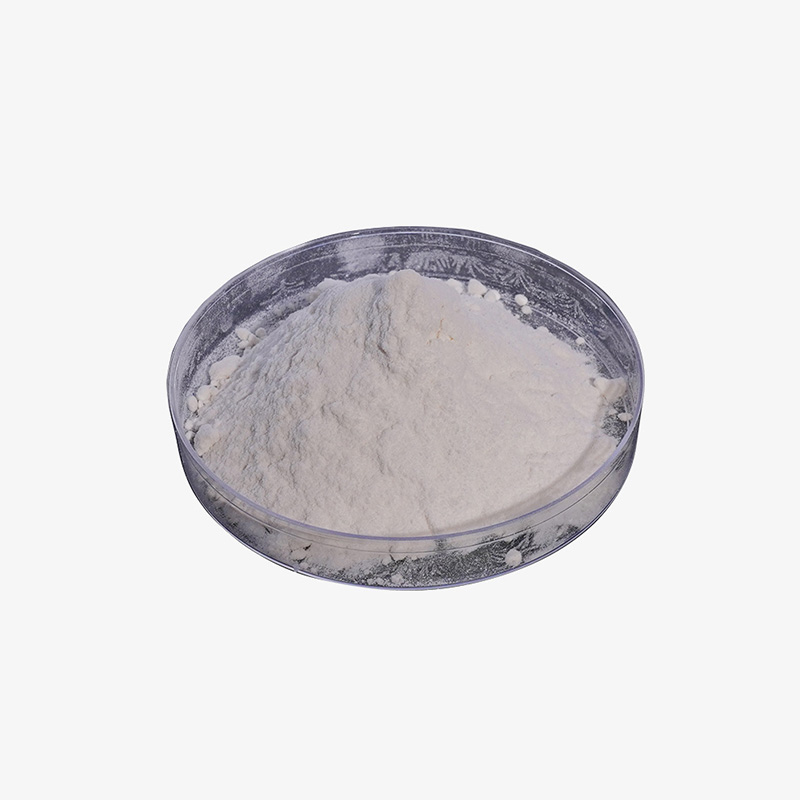
Solid Sodium Silicate Powder
A dry, stable powdery specification with long shelf life and low transportation costs. It avoids liquid leakage and deterioration during storage and delivery, ideal for small and medium-sized paper mills and intermittent production scenarios. It can be dissolved on demand, retaining complete functional properties for flexible papermaking production.
Applications of Sodium Silicate in Paper Manufacturing

Paper Deinking
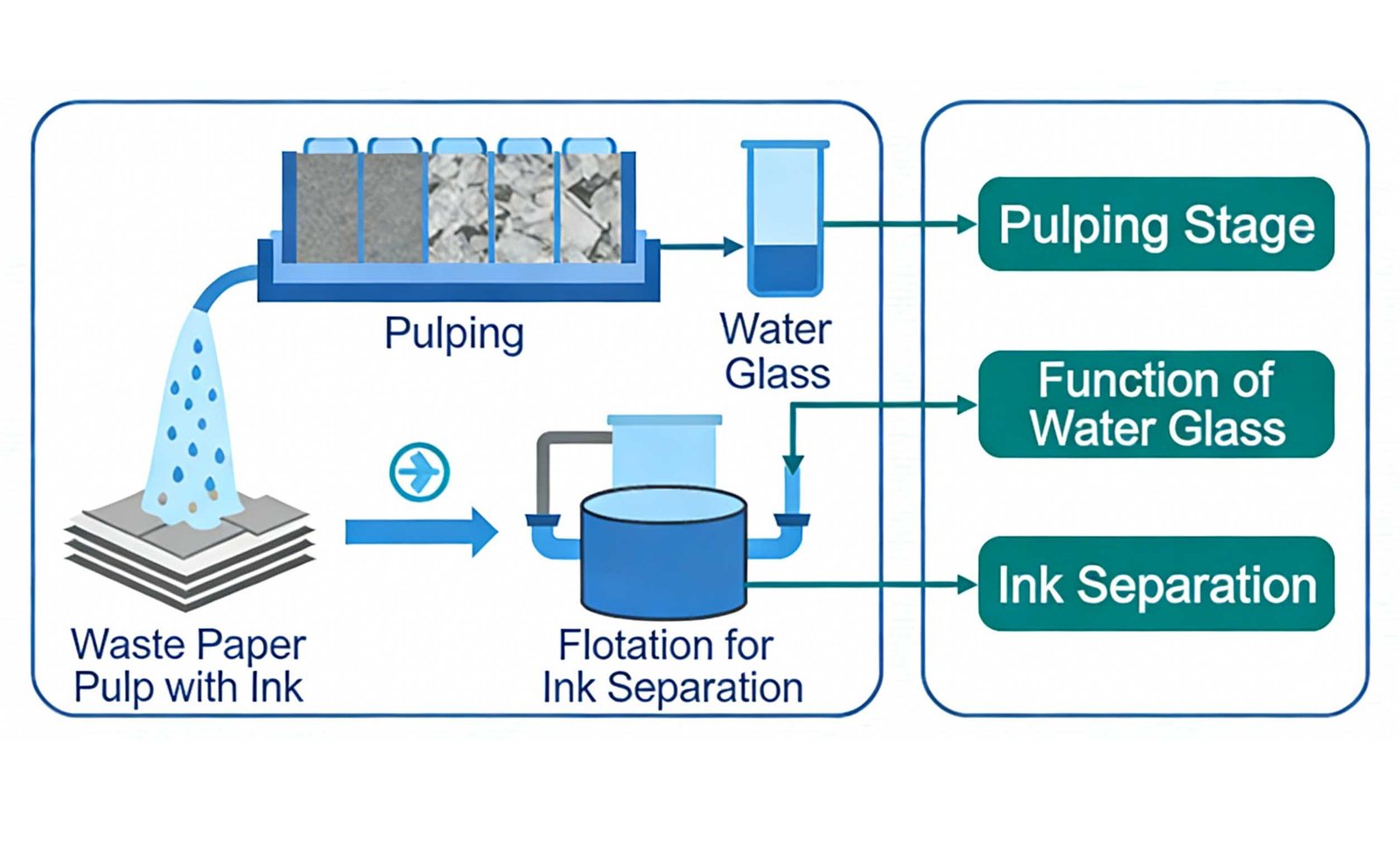
Sodium silicate plays a critical role in waste‑paper deinking. It helps improve ink removal by detaching ink particles from fiber surfaces, stabilizes alkaline conditions throughout the deinking system, and effectively improves recycled paper quality for finished recycled pulp output.
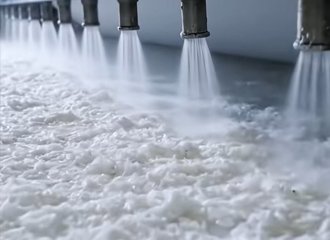
Bleaching Stabilizer
As a reliable bleaching auxiliary, sodium silicate delivers hydrogen peroxide stabilization in pulp bleaching. It prevents metal ion decomposition of peroxide agents, reduces unnecessary chemical consumption, and significantly helps improve pulp brightness.
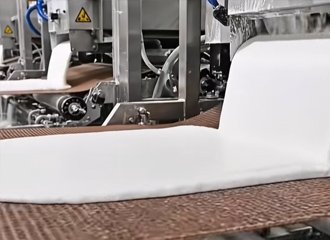
Pulp Processing and Fiber Treatment
In pulp processing workflows, sodium silicate can improve fiber dispersion to avoid fiber agglomeration, accurately control pH of pulp slurry, and comprehensively enhance pulp performance for follow‑up papermaking steps.
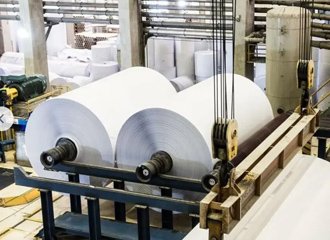
Paper Coating Binder
Sodium silicate acts as both a binder and surface modifier in paper coating systems. It can improve coating adhesion onto base paper, enhance surface strength of paper sheets, and greatly improve printability for final printed paper products.
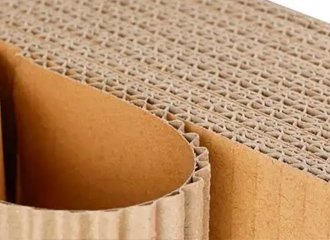
Paper Board and Packaging Applications
Sodium silicate is widely adopted for corrugated board, packaging paper and various industrial paper products. It boosts bonding performance and mechanical strength, meeting the performance requirements of heavy‑duty packaging and industrial paper‑grade production.
Recommended Reading

Deinking Process of Waste Paper: 4 Critical Principles of Sodium Silicate (Water Glass) for Optimal Performance
Water glass, chemically known as sodium silicate (chemical formula Na₂O·nSiO₂), as a cost-effective and versatile chemical raw material, has played an indispensable and significant role in the deinking process of waste paper, especially in the widely used alkaline deinking system, where it functions as a “versatile player”. Deinking of waste paper is a core step…
Sodium Silicate Specification for Paper Applications
| Parameter | Typical Range |
| Appearance | Clear liquid / White solid |
| SiO₂ Content | Customized |
| Na₂O Content | Customized |
| Modulus | 2.0-3.3 |
| Grade | Industrial Grade |
| Packaging | Drum / IBC / Bag |
How Sodium Silicate Improves Paper Manufacturing Process
Raw Material Preparation
Sodium silicate is applied in the early stage to preliminarily adjust the alkaline environment of raw pulp materials. It removes partial impurities and stabilizes slurry pH, laying a stable foundation for subsequent pulp processing and reducing fiber damage during long production cycles.
Pulp Treatment
In pulp processing, sodium silicate improves fiber dispersion and avoids fiber agglomeration. It maintains balanced slurry pH and comprehensively enhances overall pulp performance, ensuring uniform fiber status for consistent paper forming effects.
Deinking / Bleaching
In waste paper recycling, sodium silicate for paper deinking stabilizes alkaline conditions, promotes ink particle separation, and upgrades recycled paper quality. As a sodium silicate bleaching stabilizer, it inhibits hydrogen peroxide decomposition caused by metal ions, maintains stable bleaching efficiency, and effectively improves pulp brightness.
Paper Formation
During paper sheet forming, sodium silicate strengthens micro-bonding between fibers and fillers. It improves paper uniformity and structural stability, reduces paper defects, and enhances the basic tensile and bursting strength of base paper.
Coating & Finishing
As a key coating auxiliary via sodium silicate paper coating application, it acts as a binder and surface modifier. It improves coating adhesion, enhances paper surface strength, and significantly upgrades paper printability and surface smoothness.
Finished Paper Products
Sodium silicate effectively optimizes the waste paper deinking process. It stabilizes the alkaline deinking environment, accelerates ink particle detachment from fiber surfaces, and prevents redeposition of impurities. This greatly improves ink removal efficiency and significantly promotes the overall quality and whiteness of recycled paper.
Frequently Asked Questions
What is sodium silicate used for in paper manufacturing?
Sodium silicate in paper making serves as a multifunctional eco-friendly auxiliary agent. It covers core processes including pulp pH adjustment, fiber dispersion, bleaching stabilization, waste paper deinking, surface coating bonding and paper board reinforcement, effectively stabilizing production conditions and improving finished paper comprehensive performance.
Can sodium silicate be used for recycled paper deinking?
Yes, it is perfectly suitable for recycled paper processing. Sodium silicate stabilizes alkaline deinking environments, accelerates ink separation from fiber surfaces and prevents impurity redeposition, which greatly improves deinking efficiency and enhances the brightness and uniformity of recycled pulp and paper.
What modulus of sodium silicate is suitable for paper applications?
Paper manufacturing generally adopts sodium silicate with a modulus of 2.0–3.3. Medium modulus products balance alkalinity stability and bonding performance, fully adapting to deinking, bleaching and coating processes, which is the most versatile specification for industrial papermaking production.
What is the difference between liquid and solid sodium silicate?
Liquid sodium silicate for paper is a pre-dissolved aqueous solution with good fluidity, easy dosing and uniform mixing, ideal for large automated continuous production lines. Solid sodium silicate for paper is stable powder with low logistics cost and long shelf life, suitable for small and medium mills and intermittent production with on-demand dissolution.
How to select sodium silicate supplier for paper mills?
Paper mills shall choose professional suppliers with stable product modulus, low impurity content and stable batch consistency. Reliable suppliers can provide customized water glass for paper industry specifications, ensure stable bleaching, deinking and bonding effects, and support long-term stable production.
What core advantages does sodium silicate bring to paper production?
As a key inorganic auxiliary, it stably controls pulp pH value, inhibits bleaching agent invalid decomposition, improves fiber dispersion and coating adhesion. It reduces production costs while effectively upgrading paper strength, surface smoothness and printability.
Is sodium silicate applicable for packaging paper and industrial paper?
Absolutely. Sodium silicate for paper industry is widely used in corrugated board, packaging paper and various industrial paper products. It enhances inter-fiber and interlayer bonding strength, improves structural stability and compression resistance, meeting diverse industrial and packaging paper production standards.
Get a Free Quote For Industrial Silicate Products!
We believe Sanlee will be your best partner!
Please fill out the form with your contact details or give us a call, and we will get back to you within 24 hours.
For more about Sanlee, please visit our facebook page, Instagram page, and youtube page.