What is the appropriate concrete sealer dilution ratios
Concrete sealer is the core material for creating high-strength and highly wear-resistant cured floors. The water dilution ratio is a key factor affecting the construction effect and is also the most confusing issue for many construction workers: Should Concrete sealer be diluted with water? What is the appropriate dilution ratio?
What are the effects of diluting too much or being too concentrated? This article will address these core pain points, providing a detailed analysis of the dilution logic of Concrete sealer, the suitable ratios for different floors, and precautions. Based on the characteristics of our factory’s original liquid products, it will guide you step by step to select the correct ratio, doubling the effect of the cured floor , especially focusing on Concrete Sealer Dilution Ratios.
1. Core issue: Should Concrete sealer be diluted with water or not?
The answer is clear: Water needs to be added! However, the proportion of water to be added should be adjusted flexibly according to the type of curing agent and the condition of the ground.
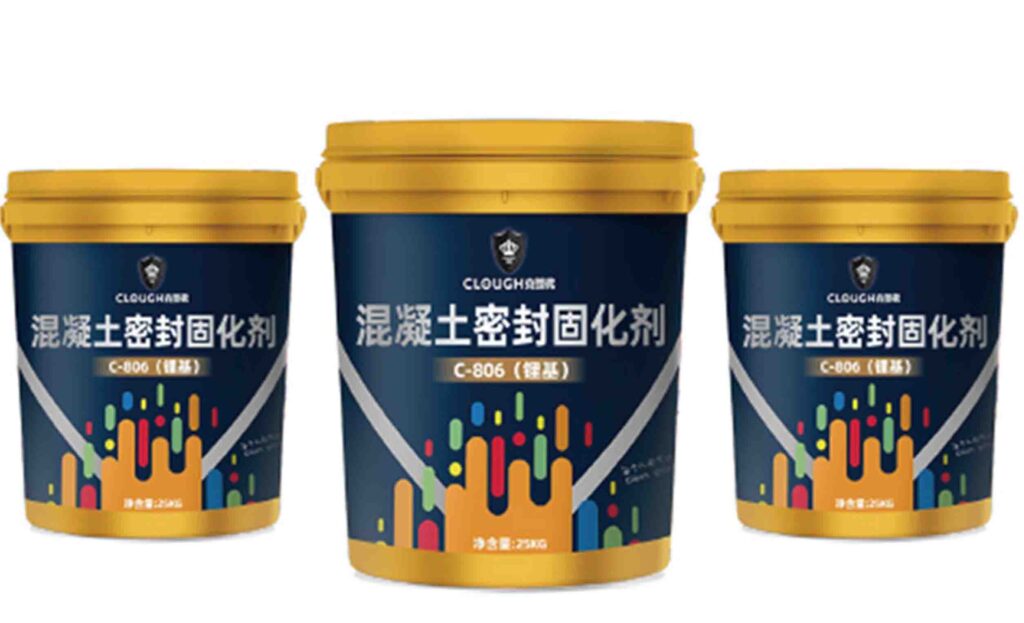
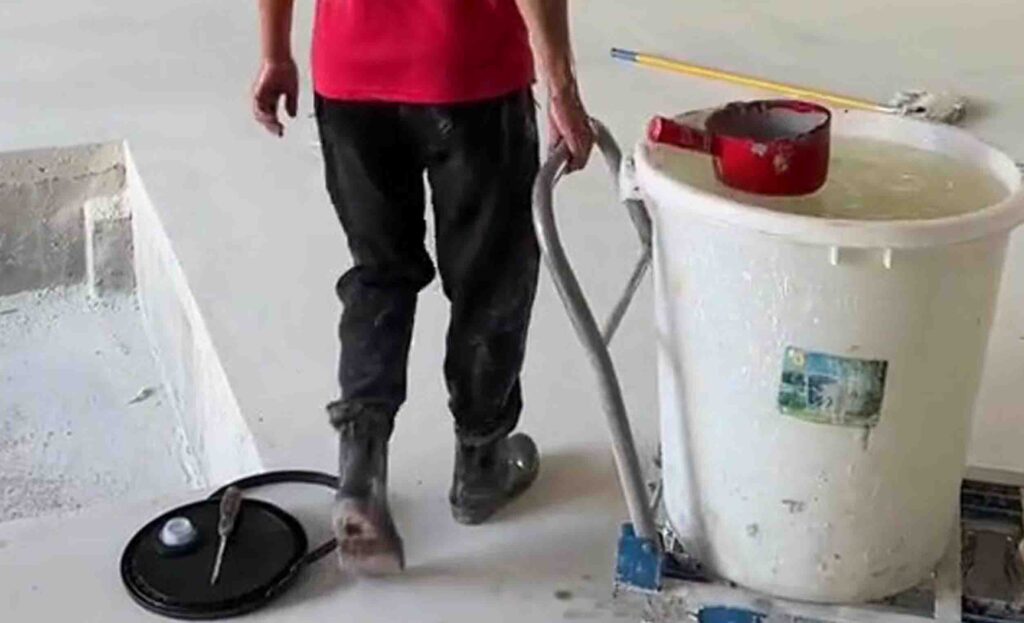
Not all curing agents have the same water addition ratio. The concrete sealing curing agent produced by our factory is a high-concentration original liquid and has not been diluted. Using it directly with an excessively high concentration will not only increase the construction cost but also prevent the curing agent from fully penetrating into the concrete interior. The surface is prone to forming a film, peeling off, turning white, and falling off, seriously affecting the curing effect.
The main purpose of water addition is to reduce the concentration, so that the curing agent can evenly and fully penetrate into the interior of the concrete, react chemically with the active components in the concrete, form a dense hardened layer, and thereby achieve the effect of enhancing the hardness and wear resistance of the floor. Therefore, correct water addition is the prerequisite for ensuring the quality of the curing floor, rather than an optional step—this is the core basis of Concrete Sealer Dilution Ratios.
2. Core Principle: The denser the ground, the more water should be added; the looser the ground, the less water should be added.
The core logic behind choosing the water dilution ratio is based on the compactness and water absorption capacity of the concrete surface. Remember this principle, and you will be able to easily select the correct ratio and avoid making mistakes: the more compact the surface and the poorer its water absorption capacity, the higher the water dilution ratio; the more loose the surface and the stronger its water absorption capacity, the lower the water dilution ratio.
The original liquid of the curing agent in our factory can be diluted with water at a maximum ratio of 1:8. This ratio is the optimal value for a specific surface and is not applicable to all scenarios. Blindly pursuing a high dilution ratio (the thinner the better) will result in insufficient concentration of the curing agent, insufficient penetration depth, and inability to form a sufficient thickness of the hardened layer.
The hardness and wear resistance of the surface will not reach the expected level. On the other hand, a too low dilution ratio (with excessive concentration) will lead to waste and may cause uneven surface curing, cracking and other problems—these are common mistakes in mastering Concrete Sealer Dilution Ratios.
3. Precise Watering Schemes for Different Surfaces (Essential for Practical Application)
Based on the characteristics of the raw liquid in our factory, we provide precise water dilution ratios for different types of concrete floors. This covers common scenarios such as new floors and old floors, and can be directly applied—these are practical application guidelines for Concrete Sealer Dilution Ratios:
(1) New concrete floor: Water mixing ratio 1:3 to 1:5
The newly poured concrete floor has a relatively loose surface, high water absorption capacity, and numerous internal pores. It requires a sufficient concentration of curing agent to penetrate deep into the material and react fully with the concrete. Therefore, it is recommended to control the water mixing ratio at 1:3 to 1:5. This concentration can ensure the penetration depth of the curing agent and avoid surface problems caused by excessive concentration, ensuring that the ground after curing is uniform in hardness and has strong wear resistance, laying a good foundation for subsequent grinding and polishing—this is a key scenario of Concrete Sealer Dilution Ratios for new floors.
(2) Old concrete floor / Ground with poor absorption: Water dilution ratio 1:5 to 1:8
After long-term use, the surface of old concrete becomes relatively dense and its water absorption capacity decreases. Additionally, for some floors that have been polished or repaired, their density increases, which also reduces their ability to absorb the curing agent. For such floors, the water mixing ratio can be appropriately increased, controlled at 1:5 to 1:8, and the concentration of the curing agent can be reduced to make it easier to penetrate into the interior of the floor. This avoids the situation where the high concentration prevents penetration, resulting in surface cracking and dusting, and affecting the curing effect—this is the targeted Concrete Sealer Dilution Ratios for old or low-absorption floors.
(3) Special Surfaces: Flexible Proportional Adjustment
If the ground has extremely large pores and extremely strong water absorption (such as a ground with severe sanding), the water mixing ratio can be appropriately reduced to 1:2 to 1:3, and the concentration of the curing agent can be increased to ensure sufficient penetration.
If the ground is extremely dense (such as a high-strength concrete ground), a maximum water mixing ratio of 1:8 can be attempted, and the wiping time after application should be prolonged to ensure that the curing agent fully penetrates—this is the flexible adjustment method of Concrete Sealer Dilution Ratios for special surfaces.
4. Watering and Key Construction Precautions
1. When diluting the water, it is necessary to stir thoroughly to ensure that the original curing agent solution and water are fully mixed, avoiding uneven concentration areas that may lead to inconsistent ground curing results;
2. The dilution ratio should be adjusted according to the actual situation of the ground surface. Do not blindly copy others’ methods. It is recommended to conduct experiments on a small area of the ground surface before construction to confirm the effect before conducting large-scale construction—this is a key reminder for correctly applying Concrete Sealer Dilution Ratios;
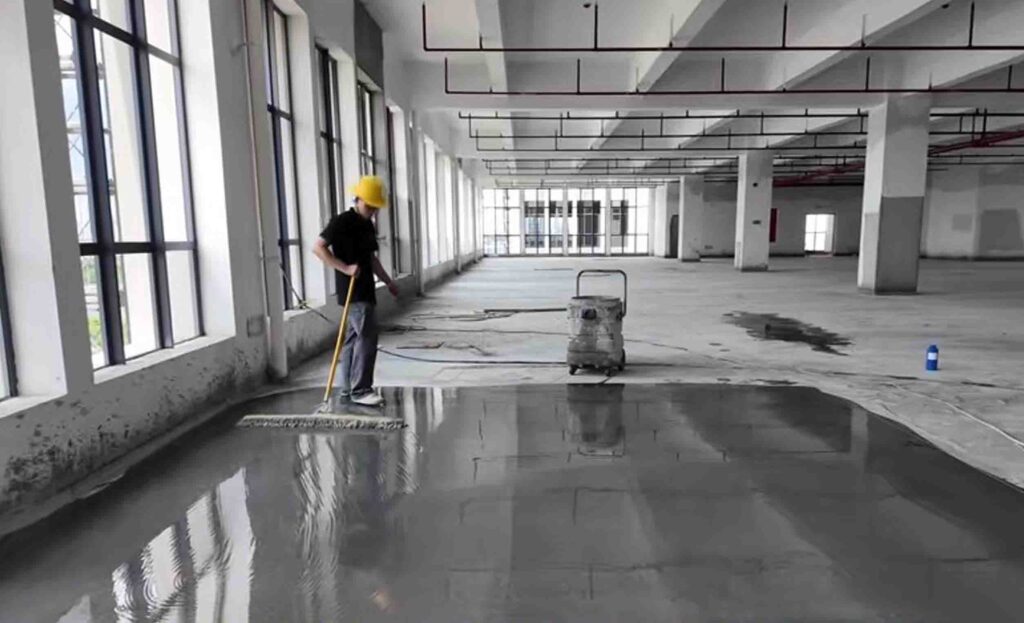
3. Regardless of the dilution ratio, after spraying the curing agent, it is necessary to drag and wipe back and forth for more than 2 hours to ensure that the curing agent fully penetrates and avoid local accumulation;
4. The cured agent after dilution should be used promptly. Do not store it for a long time as it may affect its activity and curing effect.
In conclusion, the Concrete sealer must be mixed with water. The key point is to follow the principle that “the denser the surface, the more water to be added; the looser the surface, the less water to be added”.
The original liquid of our factory can be mixed with water at a ratio of up to 1:8. According to the different characteristics of new and old surfaces, an appropriate ratio of 1:3 to 1:8 should be selected to ensure that the curing agent can fully exert its effect, doubling the hardness of the cured floor and improving its durability.
Mastering the above water-mixing techniques will enable you to easily avoid construction mistakes and create high-quality cured floors, and correctly grasp Concrete Sealer Dilution Ratios to achieve optimal construction results.
for more information ,please visit our facebook page