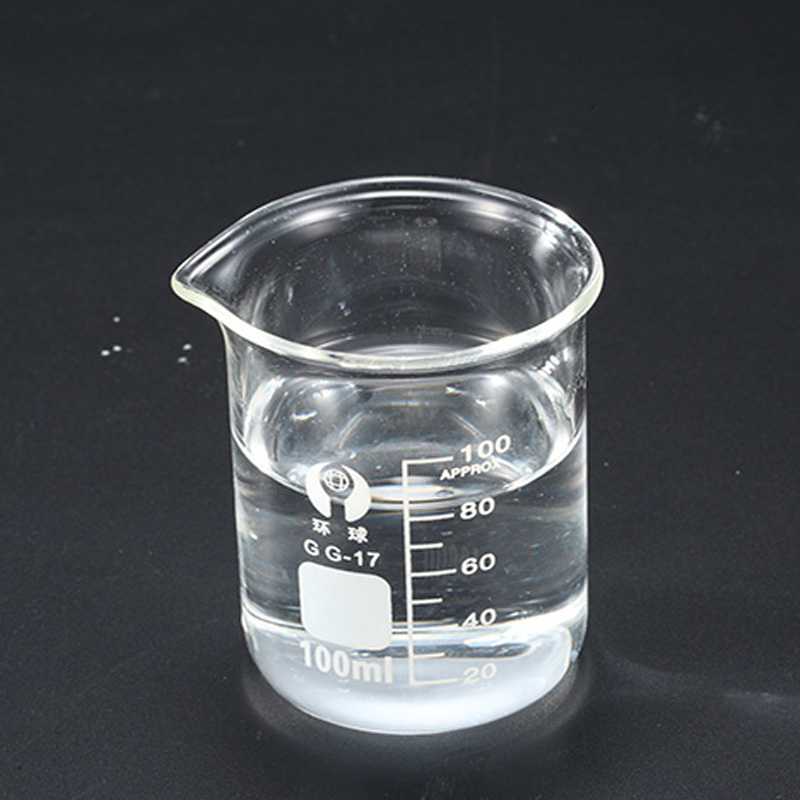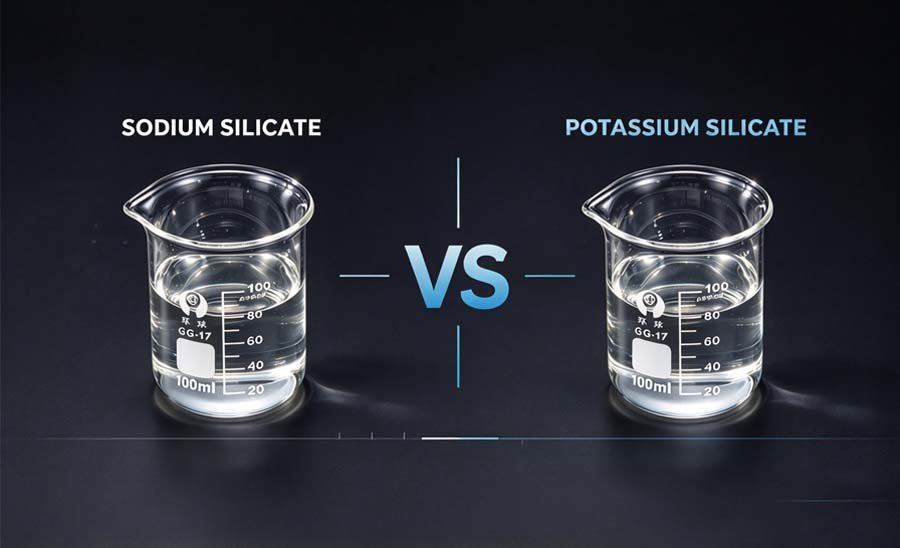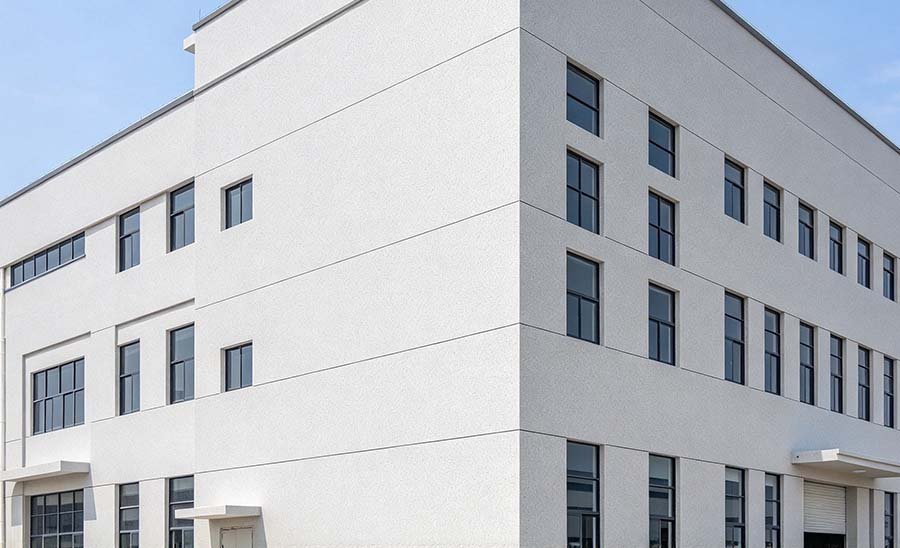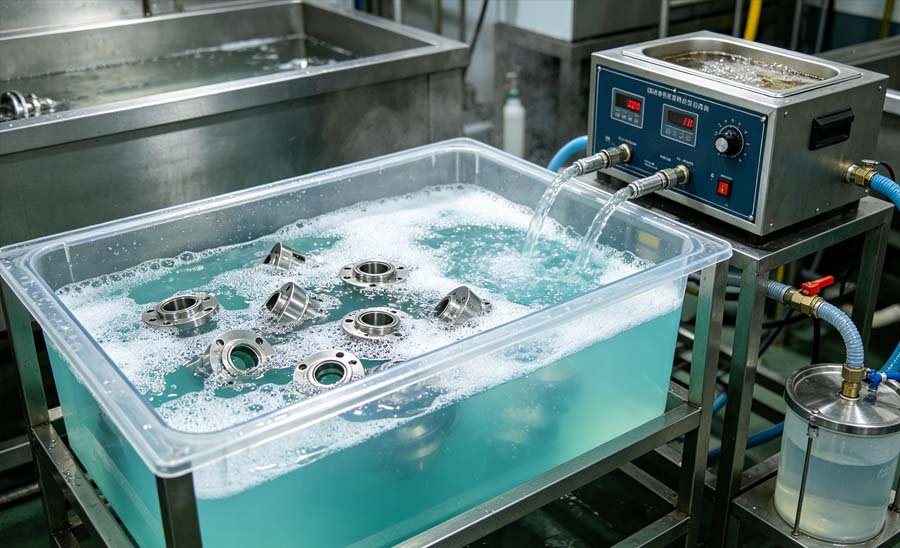
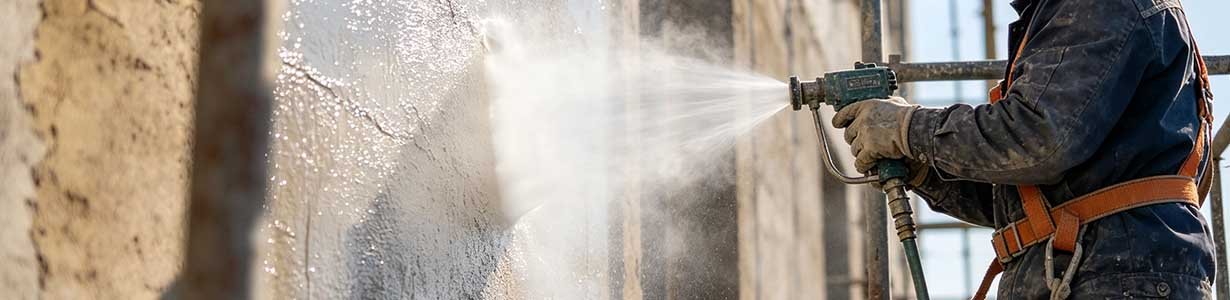
Sodium silicate, also known as water glass, is widely used in mineral-based waterproofing systems for concrete, masonry and other porous building materials. Its ability to penetrate suitable mineral substrates and react with available components makes it a valuable raw material in sodium silicate waterproofing formulations and surface treatment systems.
Sanlee Chemicals supplies industrial-grade sodium silicate solutions with customizable modulus and concentration. Whether you are working on new construction or maintenance projects, a well-selected sodium silicate waterproofing concrete grade can support reduced water absorption and improved surface density across a wide range of porous substrates.
Request Technical Data Get a Product Recommendation
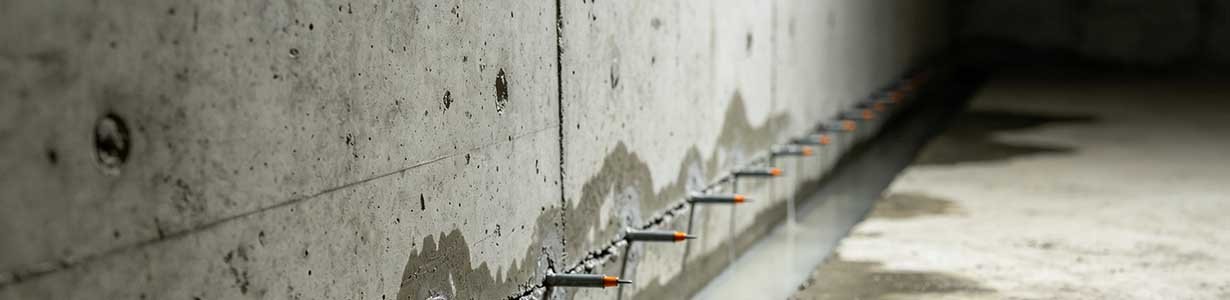
What Is Sodium Silicate Waterproofing?
Sodium silicate waterproofing generally refers to the use of sodium silicate-based solutions in waterproofing treatments or formulations designed for porous mineral substrates. Depending on the formulation and the substrate, sodium silicate may penetrate into the surface structure and contribute to the formation of a denser mineral matrix.
Sodium silicate is also called water glass because it dissolves in water to form a clear, viscous, glass-like solution. The name has been used for decades across construction and industrial markets, which is why water glass waterproofing formulations are often discussed together with their silicate-based counterparts.
In a waterproofing system, sodium silicate plays a functional rather than decorative role: it can react with components inside suitable mineral substrates and help refine the pore structure. It is commonly considered for concrete, cement-based materials, masonry and other porous mineral surfaces.
The key difference between sodium silicate and ordinary film-forming surface coatings lies in the mechanism. A coating stays on top of the substrate and blocks water at the surface. Sodium silicate, by contrast, can penetrate into the substrate and modify the material from within. This makes water glass for waterproofing particularly interesting for mineral surfaces where a simple surface film may not be enough.
How Does Sodium Silicate Waterproofing Work?
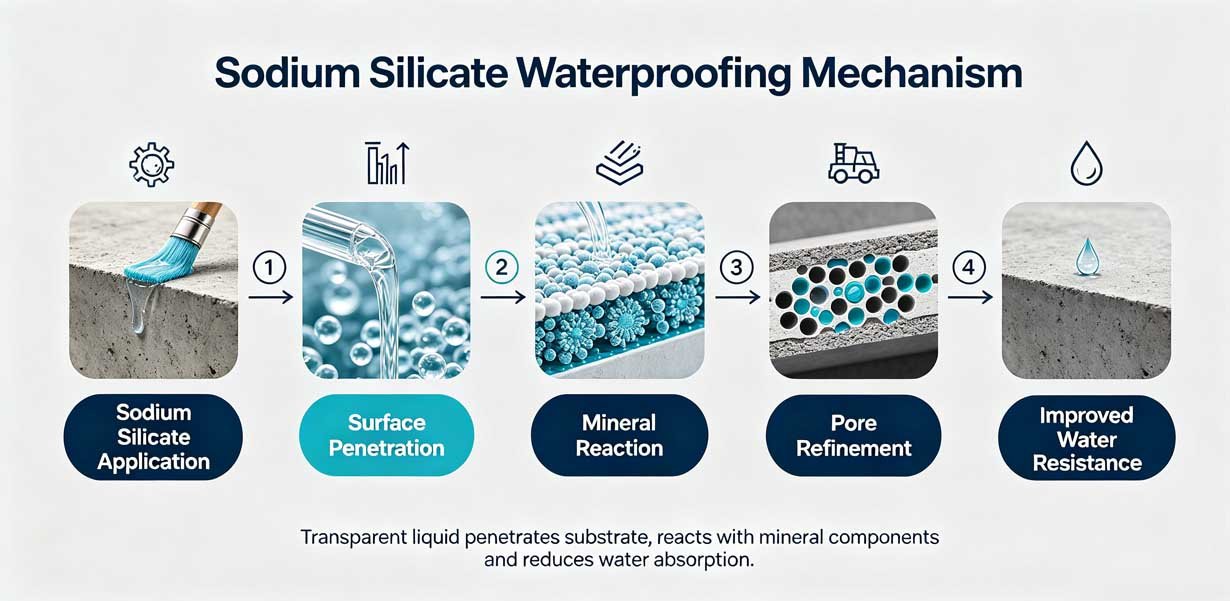
Sodium silicate waterproofing works through a four-stage mechanism that depends on substrate density, surface condition and formulation:
Step 1: Penetration into Porous Mineral Surfaces
Sodium silicate solution can penetrate into porous concrete, cementitious materials or masonry surfaces depending on substrate density, surface condition and formulation.
Step 2: Reaction with Available Mineral Components
Within suitable mineral substrates, silicate compounds may react with available calcium-containing compounds and other reactive components.
Step 3: Formation of a Denser Mineral Structure
The reaction can contribute to the formation of additional mineral compounds within pores and capillary structures.
Step 4: Reduced Water Penetration
By helping reduce surface porosity and capillary absorption, the treated substrate may achieve improved resistance to water penetration.
Process Flowchart: Sodium Silicate Application → Surface Penetration → Mineral Reaction → Pore Refinement → Improved Water Resistance
Key Benefits of Sodium Silicate Waterproofing
| Reduced Water Absorption | Helps reduce water penetration into porous mineral substrates. |
| Deep Penetration Potential | Can penetrate into suitable porous concrete and masonry surfaces instead of forming only a surface film. |
| Mineral-Based Treatment | Suitable for inorganic and mineral-based waterproofing formulations. |
| Compatible with Cementitious Systems | Can be used as a raw material or functional component in selected cement and mineral-based formulations. |
| Improved Surface Density | May contribute to pore refinement and a denser substrate structure. |
Industrial Formulation Flexibility Modulus, concentration and other specifications can be adjusted according to application requirements.
How to Choose Sodium Silicate for Waterproofing Applications
| Modulus | Different SiO₂/Na₂O ratios can influence reactivity and formulation performance. |
| Concentration | The solids content and concentration should be selected according to the formulation and processing requirements. |
| Viscosity | Viscosity may affect pumping, mixing, application and compatibility with other formulation components. |
| Purity | Industrial applications may require control over impurities depending on the final product formulation. |
| Customized Specifications | Different waterproofing formulations may require different modulus, density, solids content and viscosity ranges. |
Recommended Sodium Silicate Products
|
|
|
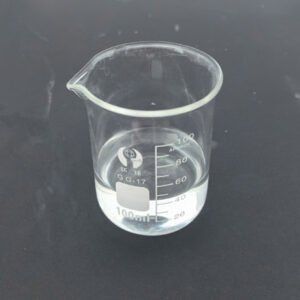
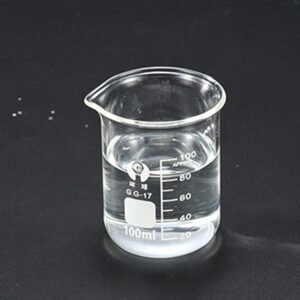
Suitable for industrial formulations, concrete treatment and mineral-based applications. | Designed for applications requiring specific alkalinity and formulation characteristics. | Customized Sodium Silicate Solution Custom specifications available for industrial formulation requirements. |
Sodium Silicate Waterproofing Applications
Concrete Waterproofing
Used in concrete treatment and selected waterproofing formulations to help reduce water absorption and improve surface density.
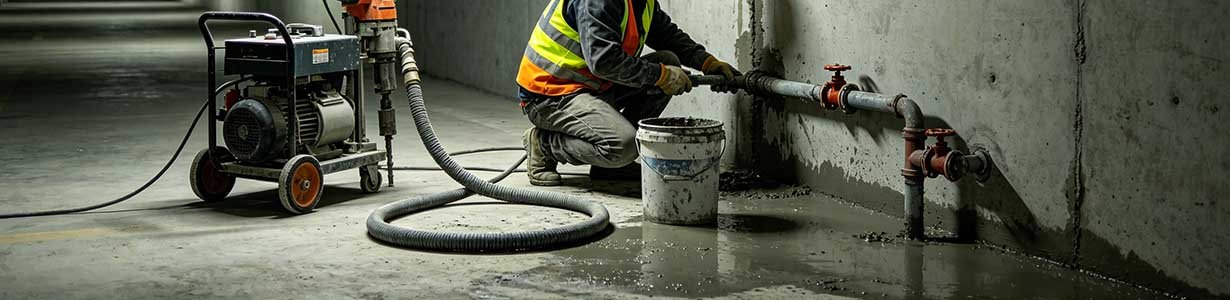
Basement Waterproofing
Suitable for mineral and cementitious waterproofing systems used on basement walls and related concrete structures.
Masonry Waterproofing
Can be used in treatments for porous masonry materials such as brick, mortar and mineral surfaces.
Cement-Based Waterproofing Systems
Used as a functional raw material in selected cementitious waterproofing formulations.
Underground Structures
Potential applications include tunnels, foundations and other mineral-based structures requiring improved resistance to water penetration.
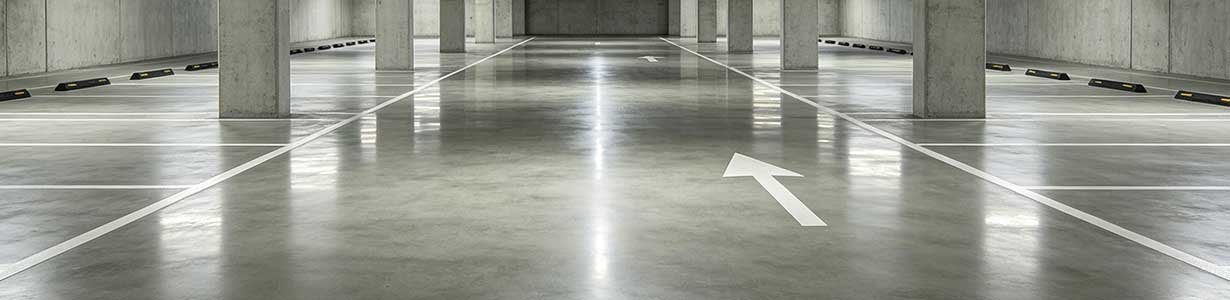
Industrial Concrete Floors
Can be considered in concrete treatment systems where water resistance, surface densification and durability are required.
Sodium Silicate Waterproofing for Concrete
Concrete is naturally porous. During mixing, excess water creates capillary pores as it evaporates, leaving a network of fine channels that can carry moisture deep into the structure. This is why untreated concrete absorbs water, salts and aggressive agents over time.
Sodium silicate addresses this at the source. When applied as part of a sodium silicate waterproofing concrete treatment, the solution carries silicate compounds into the capillary structure, where they can react with available calcium components and help form denser mineral products inside the pores.
There is an important distinction between penetration and surface coating. A surface coating forms a separate layer that can peel, chip or wear away. A penetrating silicate treatment works inside the substrate, which is one reason water glass waterproofing is often grouped with penetrating concrete treatments rather than film-forming systems.
Because the mechanism overlaps with concrete densification, sodium silicate is frequently compared with densifiers. In fact, sodium silicate concrete waterproofing and concrete densification share a common principle: both use silicate chemistry to react with the mineral matrix and refine porosity. The difference is the performance target — waterproofing focuses on water resistance, while densification focuses on surface hardness and dusting control.
For projects where both water resistance and surface durability matter, users often combine penetrating silicate treatments with products such as a Concrete Densifier or a Lithium Silicate Floor Densifier.
Sodium Silicate vs Other Waterproofing Materials
Different waterproofing materials work through different mechanisms and should be selected according to substrate conditions and project requirements.
| Material Type | Main Mechanism | Typical Application |
| Sodium Silicate | Mineral reaction and pore refinement | Concrete and masonry |
| Film-Forming Coatings | Creates a protective surface layer | Walls, roofs and surfaces |
| Cementitious Waterproofing | Forms a cement-based waterproofing layer | Basements and concrete structures |
| Silane/Siloxane | Hydrophobic water repellency | Masonry and concrete surfaces |
For example, a film-forming coating is easy to inspect visually but depends on surface adhesion. Silane and siloxane impart hydrophobic properties that repel water at the surface level. Cementitious systems build a physical barrier. Sodium silicate concrete waterproofing, by contrast, works by modifying the mineral structure itself — an advantage on dense, mineral-rich surfaces where adhesion or penetration is a concern.
Sodium Silicate Specifications for Waterproofing Formulations
| Property | Available Options |
| Appearance | Clear to slightly colored liquid |
| Type | Liquid Sodium Silicate |
| Modulus | Customized according to application |
| Solids Content | Available upon request |
| Density | Customized specification available |
| Viscosity | Adjustable based on grade |
| Packaging | Bulk / IBC / Drum |
Need a sodium silicate grade for your waterproofing formulation? Contact our technical team for product recommendations.
Why Choose Sanlee for Sodium Silicate Waterproofing Applications?
Stable Product Quality — Consistent production standards for industrial applications.
Customized Specifications — Support for different modulus, concentration and application requirements.
Technical Application Support — Assistance with product selection for concrete, waterproofing and mineral-based applications.
Flexible Packaging — Available in drums, IBC tanks and bulk packaging.
Global Supply Capability — Suitable for international industrial customers, distributors and project suppliers.
Frequently Asked Questions About Sodium Silicate Waterproofing
Is sodium silicate good for waterproofing?
Sodium silicate can be used in selected waterproofing treatments and mineral-based formulations, particularly for porous concrete, masonry and cementitious substrates. Performance depends on substrate conditions, formulation and application methods.
Can sodium silicate waterproof concrete?
Sodium silicate can be used in concrete treatment systems designed to reduce porosity and water absorption. The effectiveness depends on concrete condition, surface preparation and the overall treatment system.
What is water glass used for in waterproofing?
Water glass, or sodium silicate, can be used in mineral-based waterproofing formulations, concrete treatment and porous substrate applications. In practice, water glass for waterproofing is evaluated for the same penetrating, mineral-based mechanism as sodium silicate, and the two terms are often used interchangeably in the construction chemical market.
Does sodium silicate form a waterproof coating?
Unlike many film-forming waterproof coatings, sodium silicate treatments may work by penetrating into suitable mineral substrates and contributing to changes within the pore structure.
What is the difference between sodium silicate and lithium silicate?
Sodium silicate and lithium silicate have different chemical compositions and application characteristics. Lithium silicate is commonly associated with concrete densification and polished concrete systems, while sodium silicate is also widely used in industrial formulations and mineral-based treatments.
Can sodium silicate be used for basement waterproofing?
Sodium silicate may be used as part of selected mineral or cementitious waterproofing systems. The specific formulation should be selected based on water pressure, substrate condition and project requirements.
What sodium silicate modulus is suitable for waterproofing?
The suitable modulus depends on the formulation, substrate and required performance. Product selection should consider SiO₂/Na₂O ratio, solids content, viscosity and compatibility with other raw materials.
Looking for Sodium Silicate for Waterproofing Applications?
Sanlee Chemicals supplies industrial-grade sodium silicate solutions for concrete treatment, waterproofing formulations and other mineral-based applications.
Whether you are developing a concrete waterproofing product, cementitious coating or industrial surface treatment, our team can help recommend a suitable sodium silicate grade based on your formulation requirements.