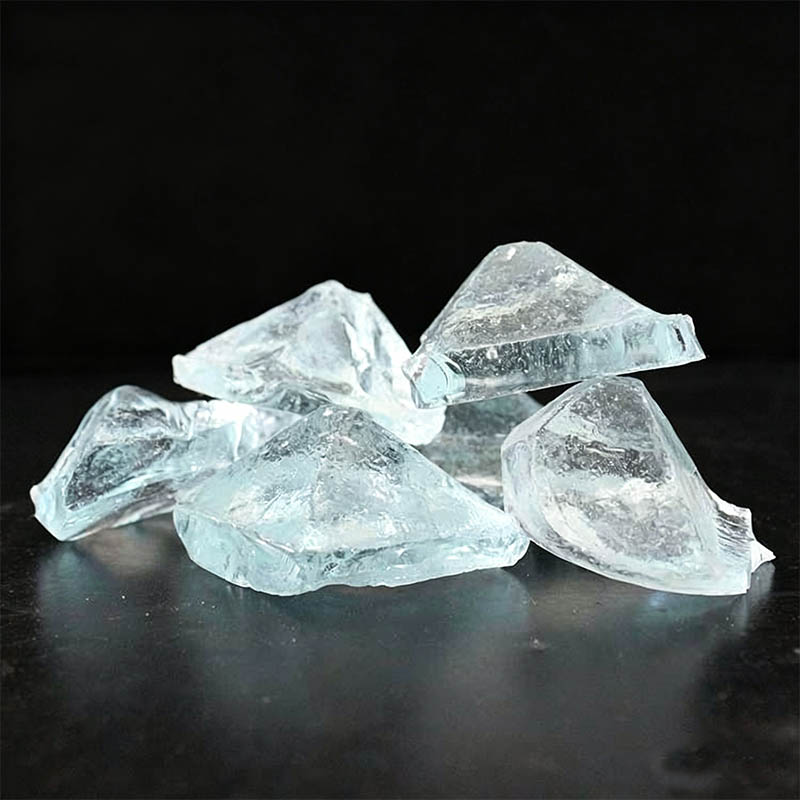
Solid sodium silicate modulus 3.1-3.3 with blue-green glassy translucent lumps for high temperature refractory and precision casting applications

Solid Sodium Silicate Modulus 3.1-3.3

Solid Sodium Silicate, also known as solid water glass, is a high-purity inorganic silicate compound with adjustable silica modulus ranging from 2.0 to 3.9. As a fundamental industrial raw material, its dominant application is the production of customized liquid sodium silicate via high-temperature and high-pressure dissolution processing.

Model Numbe

WNF-S34

Other Names

Solid Water Glass, Sodium Silicate Solid, Solid Silicate of Soda, Glass Lumps, Silicate Lumps

Molecular Formula

Na2O·nSiO2

CAS No.

1344-09-8

EINECS No.

215-687-4

Grade Standard

Industry Grade

Place of Origin

GuangDong,China

Product Details

What is Solid Sodium Silicate?


Solid sodium silicate, also known as solid water glass, is an inorganic silicate compound with the chemical general formula Na₂O·nSiO₂.

It is produced by melting quartz sand (SiO₂) and soda ash (Na₂CO₃) at high temperature, then cooling and crushing into solid lumps, flakes or granules.

Sanlee Chemical as a professional sodium silicate manufacturer and reliable sodium silicate solid supplier, we provide high-purity industrial sodium silicate with stable performance, especially the customized solid sodium silicate modulus 3.1-3.3 that meets diverse industrial production needs.

The appearance of solid sodium silicate is transparent/translucent glassy solid, colorless, light gray or pale green; hard and brittle. It is not soluble in cold water, but slowly dissolves/hydrolyzes in hot water to form liquid sodium silicate solution (liquid water glass) 


Introduction to Sodium Silicate Solid


Solid sodium silicate, widely known as solid water glass, is a versatile inorganic silicate compound with the general chemical formula Na₂O·nSiO₂.

It is industrially manufactured by fusing high-purity quartz sand and soda ash at extreme temperatures ranging from 1200℃ to 1400℃, followed by rapid cooling and crushing into hard, brittle, glassy solid lumps or flakes. This anhydrous solid product features adjustable modulus, referring to the variable ratio of silicon dioxide to sodium oxide, which directly dictates its physical and chemical performances for diverse industrial scenarios.

Visually, it appears colorless, translucent or pale gray with stable solid-state properties, boasting longer shelf life and higher concentration compared to liquid sodium silicate. It is insoluble in cold water, ethanol and acidic solutions, but can gradually dissolve and hydrolyze in hot water to form homogeneous alkaline silicate solutions.

Possessing excellent adhesion, heat resistance, acid resistance and fire-retardant properties, solid sodium silicate serves as a fundamental industrial chemical.

It is extensively applied as a high-strength binder for foundry sand molds and refractory materials, a sealing and waterproof agent for concrete construction, and a key raw material for producing liquid water glass, ceramic glazes and industrial detergents. Its stable performance and cost-effectiveness make it an indispensable material in construction, metallurgy, chemical and environmental protection industries.


CAS Number


CAS No.: 1344-09-8


Chemical Formula


General chemical formula: Na₂O·nSiO₂; The specific formula of our solid sodium silicate modulus 3.1-3.3 is matched according to the precise molar ratio of silica and sodium oxide, with stable molecular structure and consistent product batch performance.
Product Display

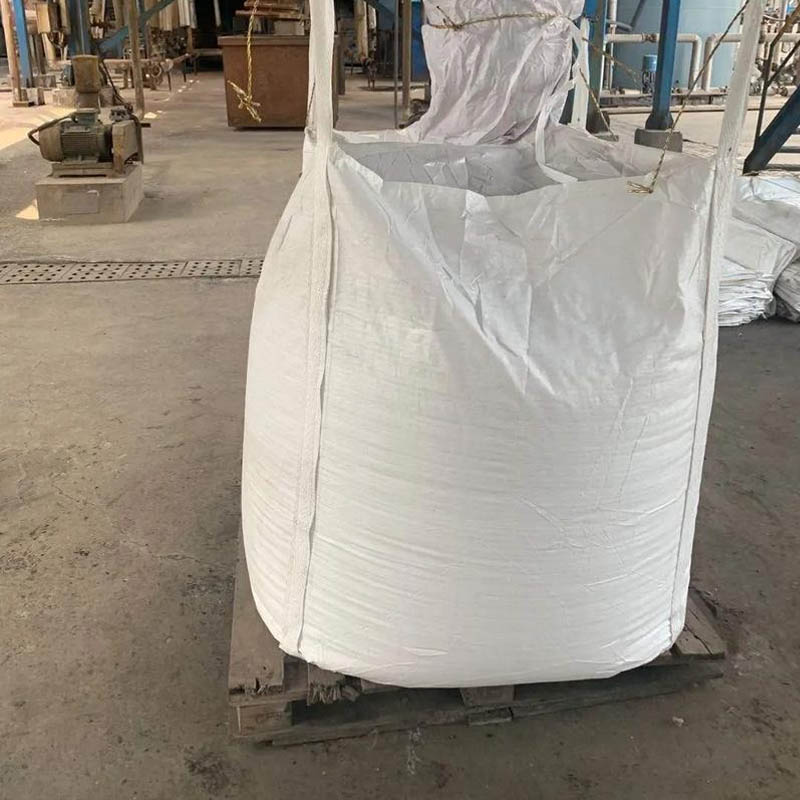
Sodium silicate solid in the warehouse with palletized 25kg bags and jumbo FIBC bags stacked in dry storage facility
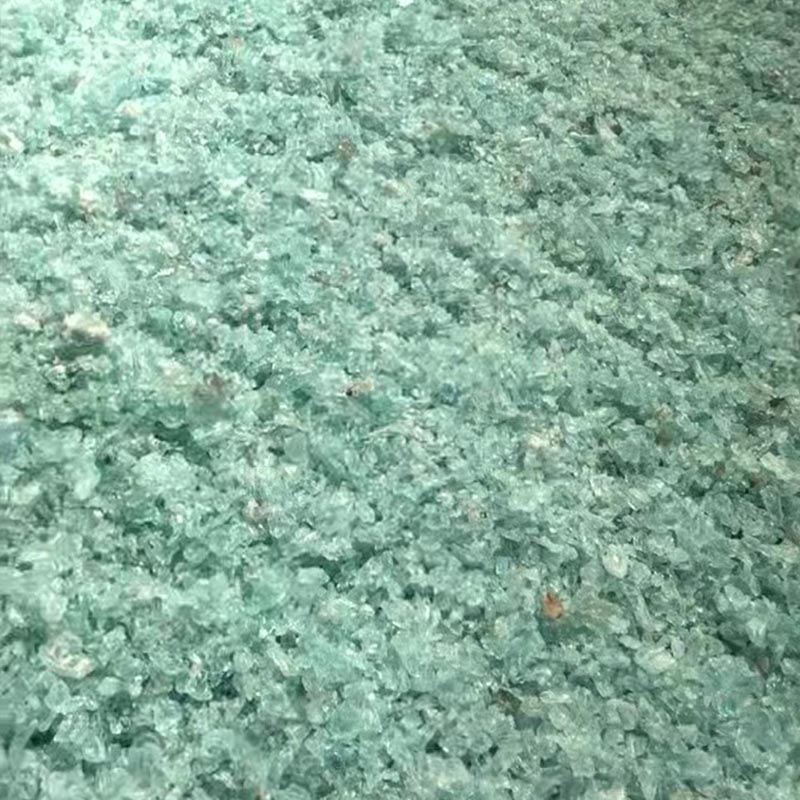
Ton-bag packaged solid water glass with FIBC jumbo bags containing blue-green sodium silicate cullet ready for shipment in warehouse
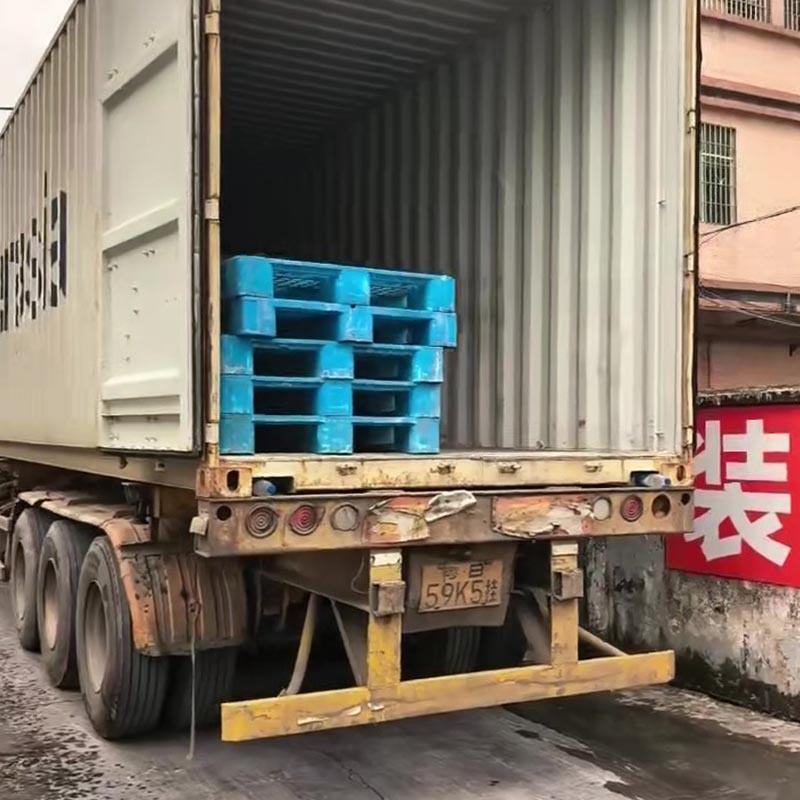
Export of silicate lumps showing ton-bags being loaded into shipping container at port for international delivery

Technical Specifications

ItemsUnitProduct parameters
Apperance/colorless, translucent or pale gray with stable solid-state properties
Modulus(n)/3.1-3.3
SiO₂%75.2-75.8
Na₂O%23.7-24.3

High silica modulus adjustability

Its modulus ratio (SiO₂/Na₂O) can be flexibly adjusted during production, meeting diverse requirements for adhesives, coatings, concrete curing and water treatment.

Excellent water solubility

After being dissolved in hot water, it forms uniform liquid water glass; dissolution speed and concentration are easy to control for industrial formulation.

Strong adhesive & film-forming property

It contains abundant silicate active groups, which can bind sand, fiber and mineral materials tightly, and form a hard, wear-resistant protective film after air-drying.

Good fireproof & anti-corrosion performance

The silicate film is non-combustible and heat-insulating; it isolates air and moisture to slow metal oxidation and material decay, widely used in fire retardant and anti-rust materials.

Solid Sodium Silicate Modulus 3.1-3.3 Application

Solid Sodium Silicate(Silicate Lumps) Core Application: Production of Liquid Sodium Silicate (Water Glass)

Solid sodium silicate is the primary raw material for industrial liquid sodium silicate. The whole production process is thermal pressure dissolution, with strict control of temperature, pressure, solid-liquid ratio and reaction time.

Complete Production Process & Parameter Control

1.Feeding & Proportioning

·Raw materials: lump/powder solid sodium silicate + industrial hot water
·Solid-liquid mass ratio: normally 1 : 1.2 ~ 1 : 2.5, adjusted according to target modulus and Baume degree of finished liquid sodium silicate
·Pre-stirring: add solid sodium silicate into the pressure dissolving reactor first, then inject quantitative hot water for preliminary mixing to avoid material caking.

2.Thermal Pressure Dissolution (Key Stage)

Temperature Control
·Heating medium: steam jacket of the reactor
·Reaction temperature range: 120 ℃ ~ 160 ℃
·Low-modulus solid sodium silicate: controlled at 120–140 ℃
·High-modulus solid sodium silicate (high SiO₂ content): controlled at 140–160 ℃ for full dissolution
·Keep constant temperature after reaching set value to prevent incomplete dissolution.

Pressure Control
·Working pressure inside reactor: 0.2 MPa ~ 0.6 MPa (gauge pressure)
·Corresponding relation: 120 ℃ ≈ 0.2 MPa; 160 ℃ ≈ 0.6 MPa
·Operation rules:
Boost slowly to avoid sudden pressure surge caused by local boiling
Maintain stable pressure throughout the holding period
Strictly prohibit overpressure beyond 0.6 MPa for safety

Holding Time
·Constant temperature & pressure holding time: 1.5 h ~ 4 h
·Small particle solid: 1.5–2.5 h; large bulk solid: 3–4 h

3.Cooling & Pressure Relief

·Stop steam heating after dissolution finishes
·Slow pressure relief by opening the exhaust valve slightly; rapid decompression is forbidden to prevent liquid flash boiling
·Cool the material to 70–90 ℃ before discharging.

4.Filtration & Finished Product Adjustment

·Filter out undissolved mineral slag and impurities with filter press
·Adjust Baume degree and modulus by adding water or supplementary alkali to obtain qualified liquid sodium silicate for downstream industries.

Other Auxiliary Applications of Solid Sodium Silicate

Concrete surface hardener & curing agent

Fire-resistant coating, inorganic binder for refractory materials

Papermaking deinking agent and bleaching auxiliary

Foundry sand binder

Water treatment precipitant and anti-corrosion coating raw material

For more about sodium silicate application, please visit our facebook page, Instagram page, and youtube page.

Packaging and Storage

Packaging

Our solid sodium silicate is packed in ton bags for convenient transportation and storage. All packaging containers are sealed and leak-proof, which can effectively avoid product leakage and pollution during transportation. As a professional sodium silicate supplier, we support flexible packaging and bulk shipping for global customers.

Storage

Store the industrial sodium silicate in a cool, dry and ventilated warehouse, keep away from high temperature, direct sunlight and freezing environment. The ambient storage temperature is controlled at 5℃-35℃. Sealed storage is required after opening to prevent water evaporation and surface crystallization. Under standard storage conditions, the product shelf life is 12 months. It is forbidden to mix with acid substances to avoid chemical reaction and product deterioration.

Frequently Asked Questions

What is the modulus of solid sodium silicate?

The modulus (silica modulus, denoted as M) of sodium silicate is the molar ratio of silicon dioxide to sodium oxide: \(M=\frac{\text{Molar amount of }SiO_2}{\text{Molar amount of }Na_2O}\) It is the most critical technical index of solid sodium silicate, directly determining its solubility, viscosity, bonding strength and application scenarios. Low modulus solid sodium silicate: 2.0–2.6 Easy to dissolve under low temperature and low pressure, mainly used for preparing low-viscosity liquid water glass. Medium modulus solid sodium silicate: 2.7–3.2 The most mainstream grade, balanced solubility and adhesive property, widely used in adhesives, casting, concrete curing. High modulus solid sodium silicate: 3.3–3.9 Higher silica content, stronger film-forming and fire resistance; requires higher temperature & pressure for dissolution.

What is solid sodium silicate mainly use for?

Core Application: Raw Material for Producing Liquid Sodium Silicate (Water Glass).This is its largest consumption field. Solid sodium silicate block/powder is dissolved in a pressure reactor with hot steam to make liquid water glass for all downstream industries.

Can solid sodium silicate dissolve in normal cold water?

No. Solid sodium silicate cannot dissolve completely in cold water or normal-temperature water. It requires hot water, high temperature and pressurized conditions (120–160℃, 0.2–0.6 MPa) to achieve full and uniform dissolution into qualified liquid water glass.

What is the modulus range of industrial solid sodium silicate?

The common industrial modulus ranges from 2.0 to 3.9. Low modulus (2.0–2.6) is easy to dissolve; medium modulus (2.7–3.2) is the most widely used; high modulus (3.3–3.9) features better film-forming and fireproof performance but requires higher dissolution temperature and pressure.

What are the key control parameters when dissolving solid sodium silicate into liquid?

Four core parameters need strict control: 1. Temperature: 120–160℃ (adjusted by modulus); 2. Pressure: 0.2–0.6 MPa gauge pressure; 3. Solid-liquid ratio: 1:1.2 to 1:2.5; 4. Holding time: 1.5–4 hours for full reaction and dissolution.

Tags

, , , , ,

Related Products

  • Potassium Silicate Concrete Densifier WNF-KCS01

    Potassium Silicate Concrete Densifier WNF-KCS01

    High-performance potassium silicate concrete densifier hardens & dustproofs concrete from within via chemical reaction. No surface peeling or efflorescence, creates durable stain-resistant polished floors for industrial, commercial and decorative concrete applications, eco-friendly zero VOC water-based formula.

    Read More

  • Sodium Silicate Concrete Densifier WNF-Na-0340

    Sodium Silicate Concrete Densifier WNF-Na-0340

    Sodium Silicate Concrete Densifier is a cost-effective liquid concrete hardener & penetrating sealer for all cement surfaces. It reacts with free calcium hydroxide to form compact calcium silicate hydrate gel, densifying porous concrete, stopping dust emission and improving wear & chemical resistance. Odourless, non-flammable and compatible with new or old concrete floors, widely used in…

    Read More

  • Lithium Silicate Densifier WNF-Li-Na-0190

    Lithium Silicate Densifier WNF-Li-Na-0190

    Premium lithium silicate floor densifier for polished & raw concrete. Water-based zero-VOC solution penetrates deep to densify, harden and dustproof floors permanently via chemical C-S-H reaction. Less efflorescence than sodium silicate, abrasion-resistant, breathable and easy to polish. Perfect for industrial, commercial and warehouse concrete flooring.

    Read More

  • Lithium Silicate Densifier WNF-Li-Na-0280

    Lithium Silicate Densifier WNF-Li-Na-0280

    Our liquid lithium silicate densifier features ultra-stable silica-lithium oxide ratio, high purity and minimal impurities. It penetrates concrete pores deeply for permanent hardening, delivers consistent low alkalinity and excellent compatibility with concrete sealers, polishing agents and mineral admixtures. Perfect for industrial floor densification, warehouse concrete polishing, commercial building ground treatment, garage floor reinforcement and high-durability…

    Read More

Technical Articles