Why Sodium Silicate Grouting Is Still the First Choice for Leak Sealing
Sodium Silicate Leak Sealing: Why It Is Widely Used Every engineer who has ever run a sodium silicate grouting job has asked the same question at some point: if this material’s late-stage strength is so much lower than epoxy and polyurethane grouts, why is it still used so widely? It is a fair question — and it deserves a practical answer. In construction material selection, there is no perfect material, only the right trade-off for a specific scenario.
Sodium silicate, commonly known as water glass, does lose to epoxy and polyurethane on final compressive strength. Yet it wins on nearly every factor that matters at the exact moment a leak appears: reaction speed, cost, injectability, process maturity, and environmental safety. That is why sodium silicate grouting remains the default choice for leak sealing projects across tunnels, dams, mines, basements, and water infrastructure worldwide.
What Is Sodium Silicate Grouting?
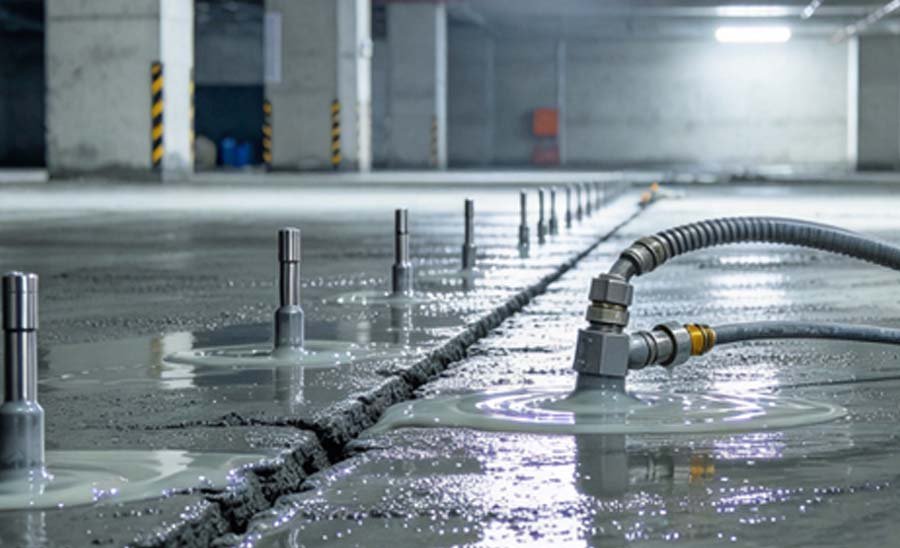
Sodium silicate grouting is a chemical grouting technique that injects a sodium silicate solution — liquid glass — into cracks, joints, voids, or porous ground together with a hardener such as calcium chloride. The two liquids meet underground and react within seconds to form a calcium silicate gel that fills the void, blocks the water path, and stabilizes the surrounding formation.
Because the reaction is controllable and the raw materials are inexpensive, sodium silicate grouting has been one of the most widely used chemical grouting methods for more than a century, especially for emergency water stopping and anti-seepage work.
The Question Behind Every Grouting Job
Why does such a widely used material still get criticized for weak late-stage strength? The key is to understand what “strength” means in different jobs.
First, strength is relative. When engineers say water glass has insufficient late-stage strength, they usually mean it cannot carry structural loads the way concrete or structural resins do. But most leak sealing scenarios never ask the grout to carry a load. They ask it to stop water and fill voids. For those jobs, the decisive indicators are anti-seepage performance and filling quality, not compressive strength.
Second, water stopping and structural reinforcement are two separate tasks in construction — and they are usually handled in two separate steps. Sodium silicate’s first task is fast water cutoff: seal the leak, dry the working environment, stabilize the situation, and buy time for follow-up reinforcement. If water keeps pouring through a joint, no subsequent repair material can do its job at all. This division of labor is exactly why the “low late-stage strength” weakness of sodium silicate is an acceptable trade-off in so many engineering scenarios.
Four Reasons Sodium Silicate Grouting Is Used So Widely in Leak Sealing
Beyond the theoretical debate, four practical advantages explain the popularity of sodium silicate in real projects.
1. Near-Instant Reaction — Seconds to Stop Flowing Water
The greatest strength of sodium silicate is speed. When the solution meets a hardener such as calcium chloride, gelation occurs within seconds to tens of seconds, forming a tough calcium silicate gel that rapidly blocks the water path. For high-pressure or high-flow leaks, the first and most urgent task is to stop the water immediately — before anything else can be planned or executed.
Water glass injection grouting delivers exactly this instant response, which is why it is the first line of defense in emergency water control. In addition, the gel time can be adjusted by changing the concentration, modulus, and mixing ratio of the two liquids, giving the grouting engineer flexible control from a few seconds to a few minutes depending on site conditions.
2. Low Viscosity and Excellent Injectability
Sodium silicate solution has naturally low viscosity and good fluidity. It can penetrate fine cracks, micro-fractures, and small pores that highly viscous organic resins often cannot reach. This injectability makes it effective not only for concrete crack sealing but also for permeation grouting in sand and gravel formations, where the goal is to fill pore space and reduce permeability over a large area.
In practical terms, low viscosity means the material can be pumped deeper, spread wider, and reach more of the problem zone — a property that matters just as much as strength in anti-seepage work.
3. Unbeatable Cost Advantage
Cost is often the deciding factor in construction. Sodium silicate is an industrial raw material produced in huge volumes, and its price is only a small fraction of organic polymer chemical grouts such as epoxy and polyurethane. For projects that consume large quantities of grout — curtain grouting, foundation treatment, and mass seepage control — material cost determines whether the project is even feasible.
Sodium silicate grouting keeps the budget under control without sacrificing the two things that matter most in water stopping: speed and seal quality. When the volume is large and water is the enemy, the cost advantage alone is often enough to justify the choice.
4. Simple, Mature Two-Component Grouting Process
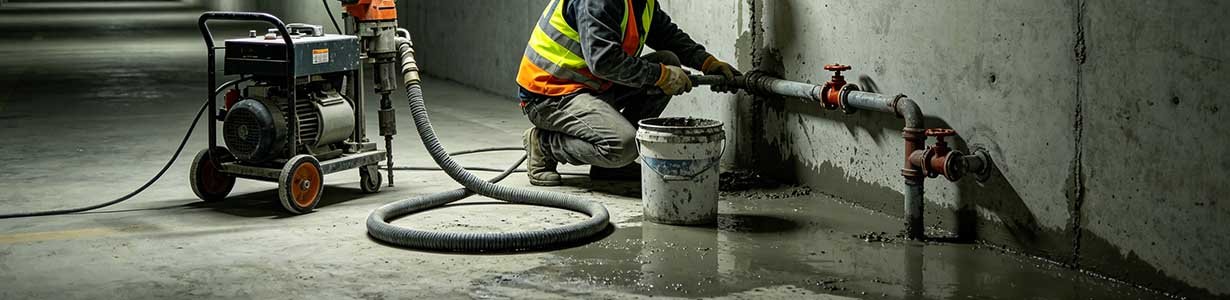
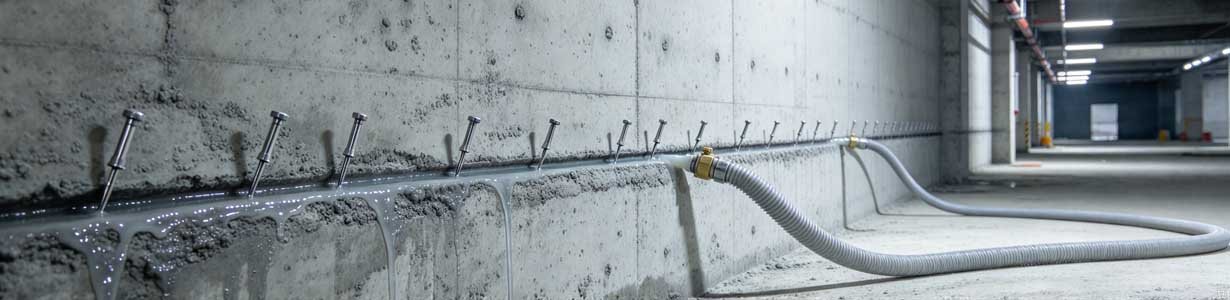
Sodium silicate grouting is built on one of the most classic and mature processes in the industry: double-liquid (two-component) grouting, with Component A being the sodium silicate solution and Component B being the hardener. The two liquids are pumped separately and mixed at the injection gun, so the reaction happens exactly where it is needed.
Because this method has been used for decades, construction crews are familiar with it, equipment requirements are simple, and training costs are low. The low technical threshold makes the technology easy to promote and replicate across projects and regions — a decisive advantage for large-scale or fast-moving worksites where specialized resin injection teams are not always available.
5. Non-Toxic and Environmentally Friendly
Compared with some chemical grouts that contain toxic components — certain isocyanate-based polyurethane systems are a typical example — sodium silicate itself is non-toxic and non-polluting. It does not release harmful gases during injection, and its reaction products are generally regarded as safe for groundwater and the surrounding construction environment.
This matters greatly in projects under environmental scrutiny: water supply tunnels, dams near drinking water sources, urban basements, and mining operations. Increasingly strict environmental regulations around the world have pushed many contractors toward greener materials, and the environmental friendliness of water glass gives sodium silicate leak sealing an additional edge over less benign alternatives.
What “Low Late-Stage Strength” Really Means
Grouting Is Not Structural Reinforcement
The criticism of sodium silicate usually comes from a misunderstanding of roles. Grouting is primarily a seepage-control and void-filling measure; structural reinforcement is a load-bearing measure. The two belong to different disciplines and are executed with different materials at different stages.
If a concrete member is structurally damaged and must carry design loads, no water glass grout can replace proper structural repair with epoxy bonding or concrete restoration. Judging water glass by the standard of structural concrete is like judging a fire extinguisher by its ability to hold books.
Where Sodium Silicate Fits — and Where It Does Not
The correct way to evaluate sodium silicate grouting is scenario by scenario. It fits where water is the primary enemy: emergency water cutoff, curtain grouting, tunnel water inrush control, dam foundation seepage, mine shaft sealing, basement leakage, and pre-treatment of water-rich ground.
It does not fit where load is the primary enemy: load-bearing crack repair, structural joint bonding, or long-term high-stress exposure — those jobs belong to epoxy, polyurethane, or structural concrete. The practical rule used by experienced grouting engineers is simple: if the problem is water, start with sodium silicate; if the problem is structure, don’t. This clear boundary is what makes the material so widely, and safely, used.
Sodium Silicate vs Polyurethane vs Epoxy Grout: A Quick Trade-Off
To see the full picture, compare the three most common chemical grouts side by side(sodium silicate vs polyurethane grouting):
| Material | Reaction Speed | Late-Stage Strength | Relative Cost | Toxicity |
| Sodium silicate (water glass) | Seconds to minutes | Low to medium | Very low | Non-toxic |
| Polyurethane | Seconds to minutes | Medium to high | Medium to high | Some contain isocyanates |
| Epoxy | Hours | Highest | High | Low after curing |
The table makes the trade-off visible: sodium silicate and polyurethane are both fast, but sodium silicate is far cheaper and safer, while polyurethane reaches higher strength. Epoxy is the strongest but the slowest and most expensive. In leak sealing, where speed and cost usually outrank long-term strength, the sodium silicate option is the natural winner.
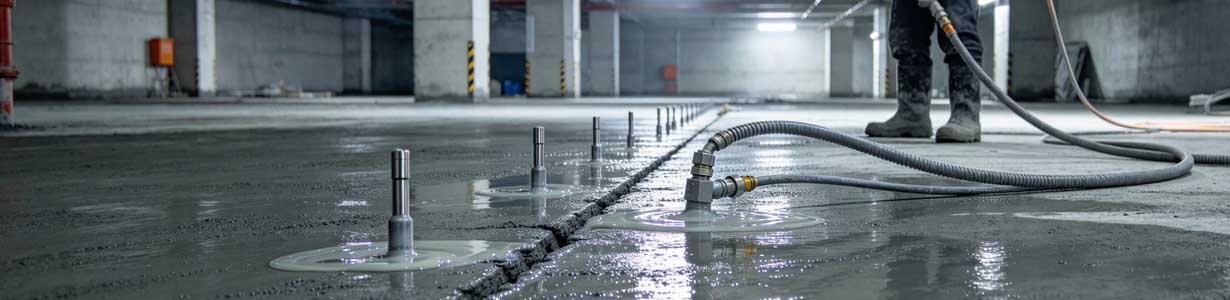
Real-World Applications of Sodium Silicate Grouting
Because of its speed and economy, sodium silicate grouting appears in nearly every type of water-control work. In tunneling, it stops water inrush at the face and consolidates water-rich ground ahead of excavation. In dam and hydraulic engineering, it forms seepage curtains in foundation rock and soil. In mining, it seals water-bearing shafts and protects working faces.
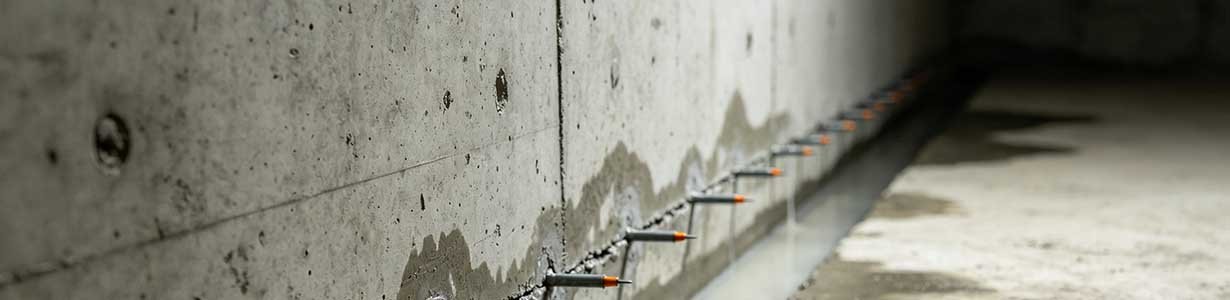
In civil construction, it repairs basement and parking-garage leaks, waterproofs retaining structures, and pre-treats poor ground before excavation. It is also widely used for emergency sealing of water supply pipes and utility ducts, where shutdown time must be kept to a minimum. In all these scenarios, the priority is the same: stop the water quickly, at reasonable cost, with a process the local crew can run reliably — which is exactly what water glass injection grouting delivers.
How to Choose the Right Sodium Silicate for Your Project
Choosing the right material starts with choosing the right product parameters. For grouting applications, the two most important controls are the modulus and the concentration of the sodium silicate solution, together with the type and ratio of the hardener. A higher-modulus solution gels faster but may be less stable; a lower concentration slows the reaction and improves penetration. Site gel-time tests are essential: mix the two liquids in the planned ratio, measure the gel time, and adjust until the setting speed matches the water flow and the injection plan.
Equally important is the source of the material. Because gel time and sealing quality depend directly on batch consistency, working with an experienced sodium silicate grout supplier matters as much as choosing the right formula. A reliable sodium silicate grout supplier provides consistent modulus, stable concentration, clear technical data, and practical guidance for mixing and injection. Many suppliers also offer potassium silicate and lithium silicate variants for specialized permeability and setting requirements, so it is worth asking for formulation support rather than simply buying by price.
Conclusion
There is no perfect material in engineering — only the right choice for the right scenario. Sodium silicate grouting is not a replacement for epoxy or polyurethane, and it was never meant to be. It is the material that stops water fastest, costs the least, injects the deepest, runs on the most mature process, and does all of this with a comparatively small environmental footprint.
For the overwhelming majority of leak sealing jobs, those advantages outweigh the lower late-stage strength. The next time someone asks why sodium silicate is still used everywhere despite its strength limit, the answer is simple: in leak sealing, the first priority is not strength — it is stopping the water. And nobody stops water faster, cheaper, or more safely than water glass.
FAQ
Q1: How fast does sodium silicate grouting set?
With calcium chloride as the hardener, sodium silicate grouting gels in seconds to tens of seconds. The gel time can be extended or shortened by adjusting concentration, modulus, and mixing ratio, allowing control from a few seconds to a few minutes.
Q2: Is sodium silicate grouting safe for groundwater?
Sodium silicate itself is non-toxic, and its reaction products are generally regarded as environmentally benign. The choice of hardener matters, so always follow the supplier’s technical recommendations for potable-water and sensitive environments.
Q3: Can sodium silicate grouting replace polyurethane grouting?
For pure water stopping and seepage control, sodium silicate is often the better value: comparable speed, lower cost, and a safer footprint. For applications requiring higher mechanical strength, polyurethane or epoxy may be necessary. Evaluate the scenario, not the brand.
Q4: What is the difference between water glass and epoxy grouting?
Water glass is a fast, cheap, low-strength solution for stopping water; epoxy is a slow, expensive, high-strength solution for structural repair. Use water glass to stop the leak, and epoxy where the structure must carry load.