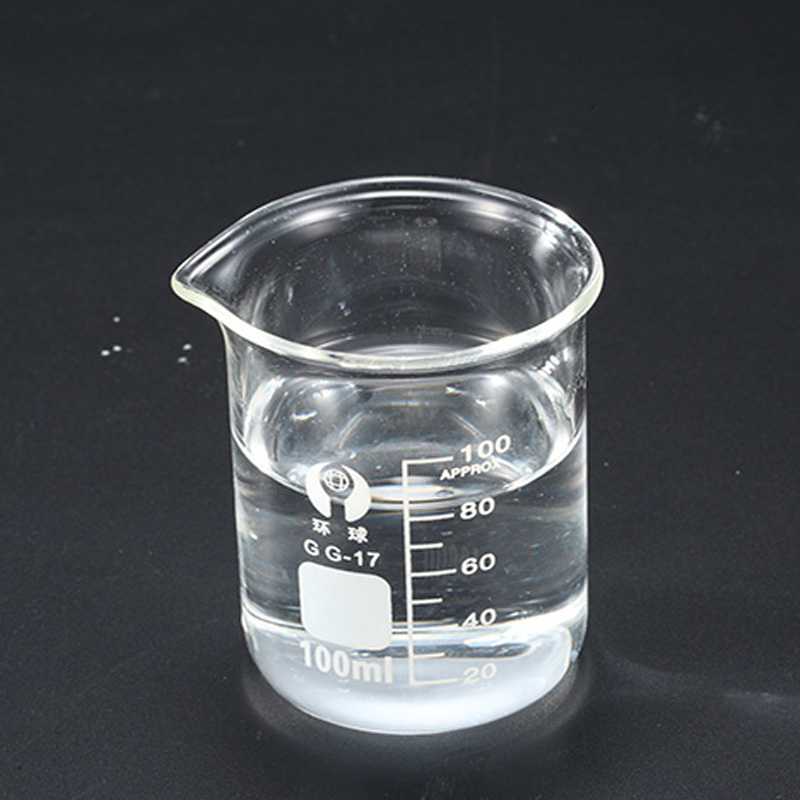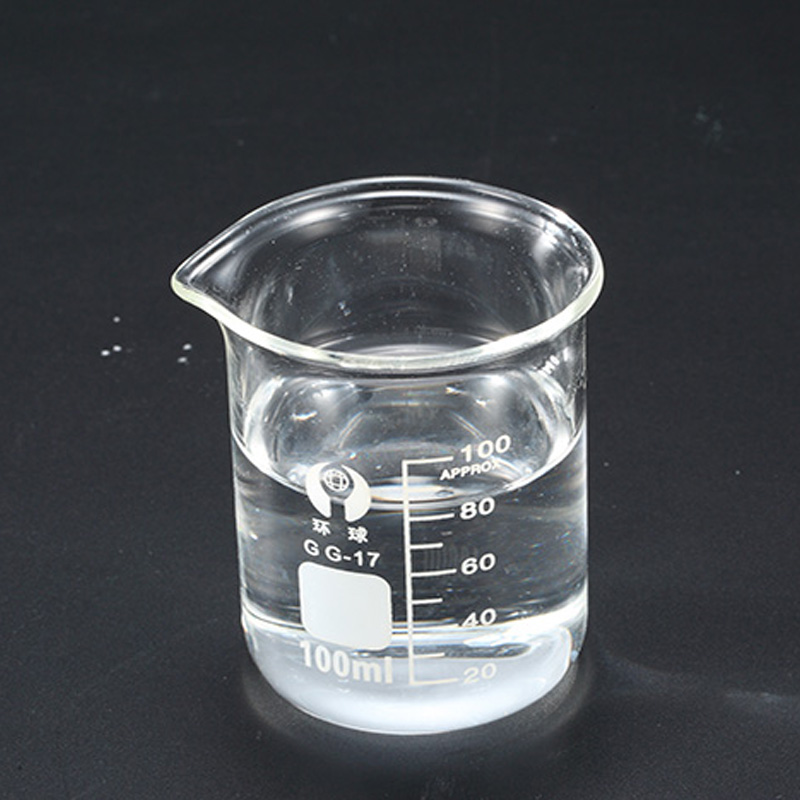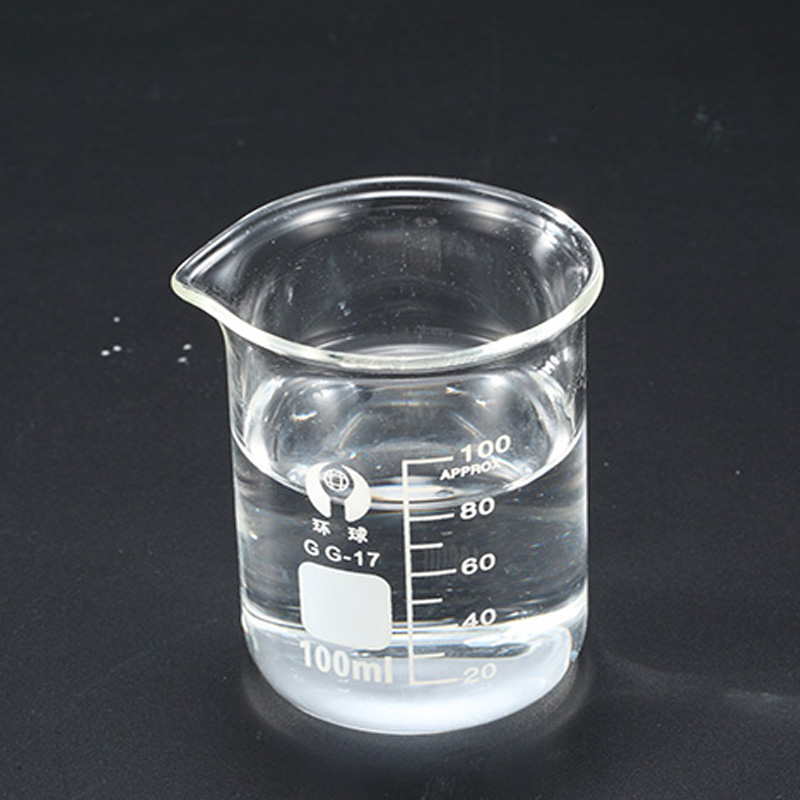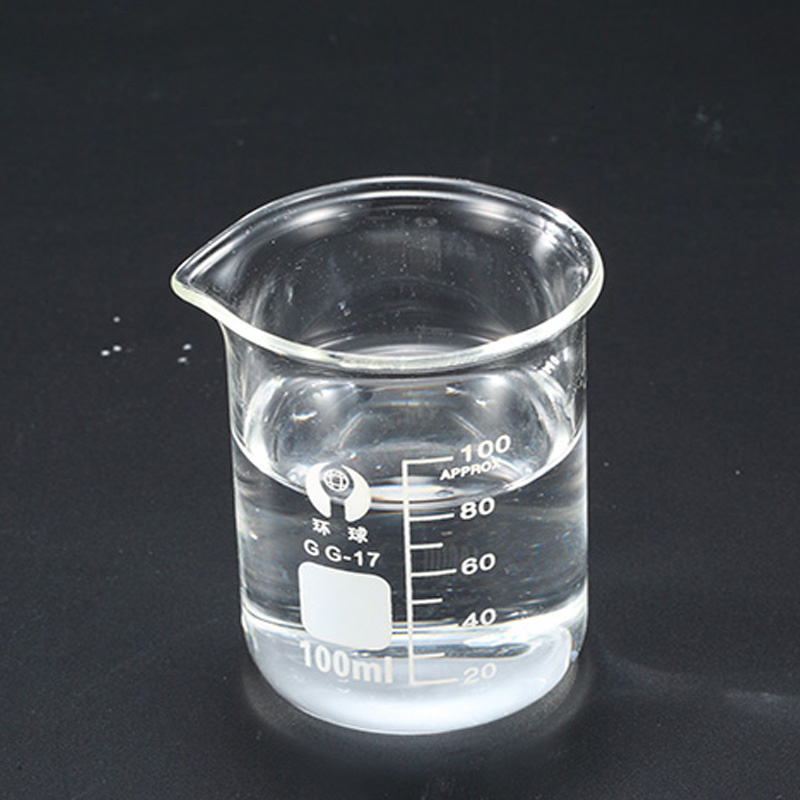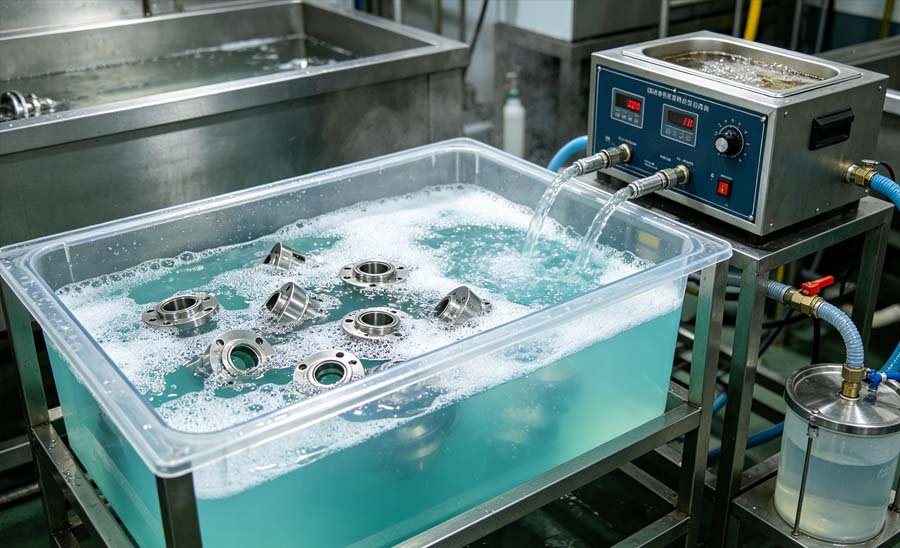
Potassium silicate binder is an inorganic, mineral-based binding material produced from soluble potassium silicate. It provides binding, film-forming and heat-resistant properties for coatings, refractory materials, welding electrodes, foundry applications and other inorganic formulations.
As a potassium silicate binder manufacturer and supplier, we supply this material in liquid and solid grades, with controlled modulus and solids content, to coating producers, refractory formulators, electrode manufacturers and other industrial users worldwide.
Request a TDS | Request a Sample | Get a Quote
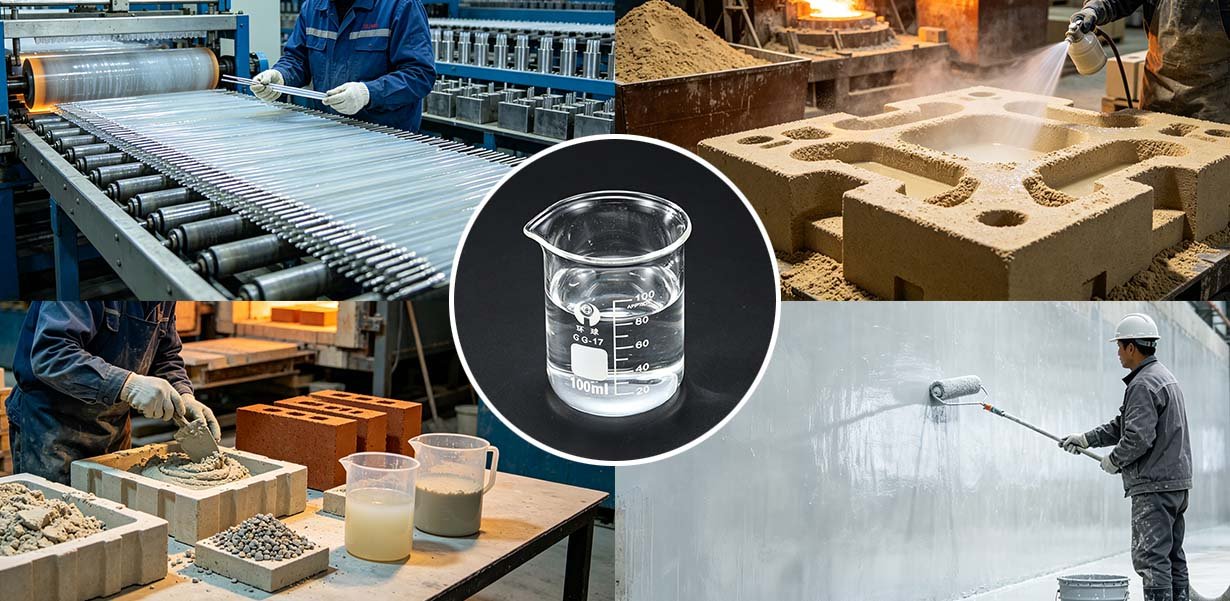
What Is Potassium Silicate Binder?
Potassium silicate is produced by fusing high-purity silica sand with potassium carbonate and dissolving the resulting glass in water. The product is a clear, alkaline liquid in which silica is held in a soluble, reactive form.
Potassium silicate works as a binder because soluble silicates contain silica in a polymerizable state. When the solution is applied to a surface or mixed into a mineral formulation, water evaporates and the dissolved silica links into a continuous inorganic network. This network bonds mineral particles together and forms a hard, heat-resistant film. This is the essence of a potassium silicate inorganic binder: a mineral-based system that binds and films without organic polymers or curing resins.
The most common commercial form is a potassium silicate liquid binder — a ready-to-use solution in which modulus and solids content are controlled during production. Solid potassium silicate is also available as glass lumps or powders that must be dissolved before use. The choice affects handling, processing and final formulation design.
During drying and curing, the silicate undergoes a gradual sol–gel transition. Soluble silica condenses into a three-dimensional network, producing a dense, coherent mineral structure with good adhesion to mineral substrates and strong resistance to heat.
How Potassium Silicate Works as a Binder
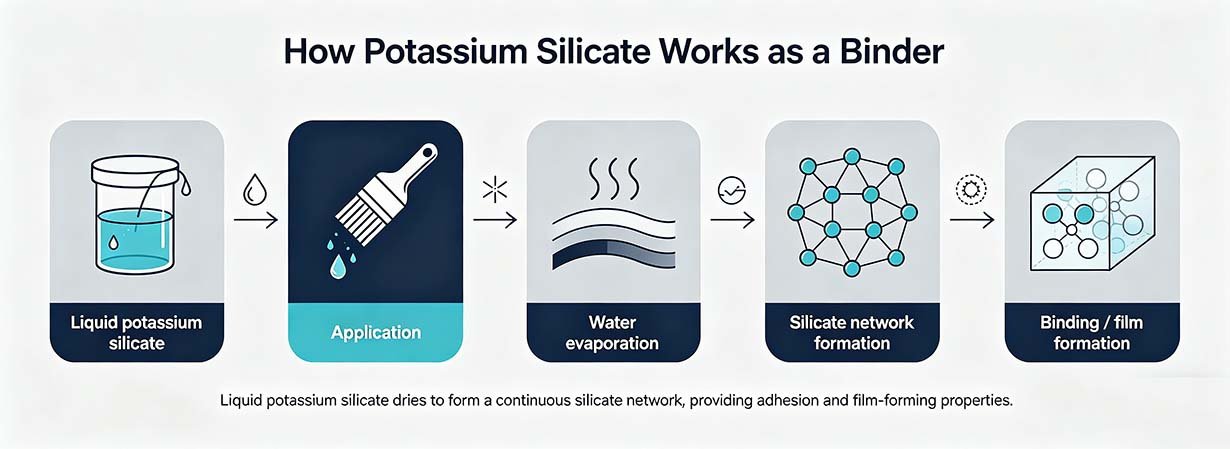
Liquid potassium silicate → Application → Water evaporation → Silicate network formation → Binding / film formation
Potassium Silicate for Binder
|
|
|
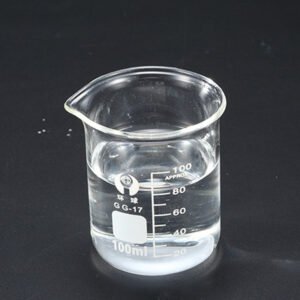
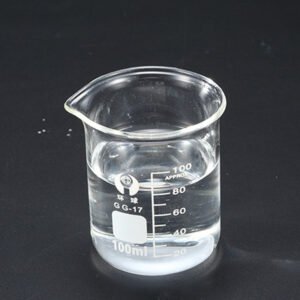
Liquid Potassium Silicate Modulus 3.9-4.0 | Liquid Potassium Silicate Modulus 3.3-3.4 | Liquid Potassium Silicate Modulus 2.5-2.6 |
| High-purity modulus 3.9-4.0 potassium silicate liquid with balanced SiO₂-K₂O ratio, stable alkalinity and low impurities. This premixed liquid silicate mixes easily with most chemical additives, widely applied in construction hardeners, welding coatings, fireproof materials, industrial cleaning agents, precision casting and agricultural nutrient additives. | High-purity modulus 2.3–3.4 liquid potassium silicate solution with stable alkalinity and low impurities. Ready-to-use water glass with great compatibility, strong bonding, heat and weather resistance for coatings, construction, casting, welding, fire retardants and agricultural fertilizers. | High-purity liquid potassium silicate with balanced SiO₂-K₂O modulus, stable alkalinity and low impurity content. Ready-to-dilute, fully compatible with most industrial additives, widely applied in welding materials, construction hardening agents, flame retardant coatings, casting binders and agricultural silicon fertilizer production. |
Key Properties of Potassium Silicate Binder
| Property | Description |
| Inorganic binding properties | Binds mineral fillers, pigments and refractory powders without organic polymers |
| Heat resistance | Dried silicate network withstands elevated temperatures |
| Film-forming capability | Forms continuous, coherent mineral films on suitable substrates |
| Alkaline nature | Strongly alkaline; compatible with alkali-tolerant ingredients |
| Water solubility | Water-based wet form; dried film remains water-sensitive until fully reacted |
| Mineral compatibility | Well suited to silica, silicates, mineral oxides and other inorganic components |
| Low organic content | Essentially mineral system with no significant organic polymer contribution |
How Does Potassium Silicate Binder Work?
1.Mixing — Potassium silicate is mixed with mineral fillers, pigments or other inorganic materials to form a homogeneous paste or slurry.
2.Application — The formulation is applied to the target surface or shaped into the required form.
3.Drying — Water gradually evaporates from the applied layer.
4.Binding / Film Formation — The silicate condenses into an inorganic binding structure.
5.Final Performance — The material gains improved cohesion, hardness and resistance to heat or mineral environments.
Potassium Silicate Binder Applications
|
|
|
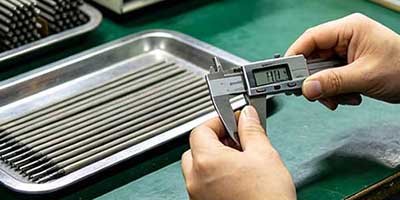
Inorganic Coatings | Potassium Silicate Paint | Welding Electrode Manufacturing |
| Used as a binder in mineral coatings, silicate coatings, architectural coatings and protective coatings. | Acts as the binder and film-forming component in mineral paint formulations. | Binds powder ingredients, supports extrusion and forming, and provides green strength during electrode production. |
|
|
|
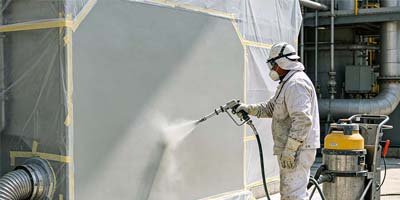
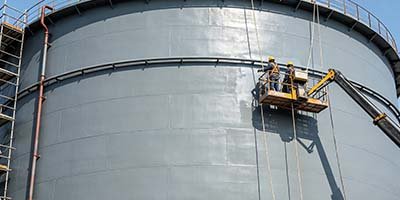
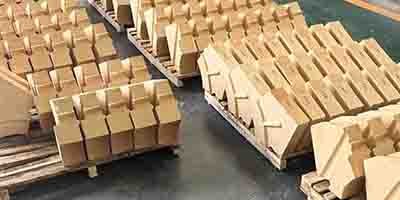
Foundry Applications | Refractory Materials | Construction Materials |
| Used in selected inorganic foundry binder systems, sand molding and core making, where the specific formulation and process are compatible. | Serves as a refractory binder and heat-resistant binder in inorganic refractory formulations. | Contributes to mineral-based materials, inorganic formulations and cement-compatible systems for surface treatment. |


Liquid vs. Solid Potassium Silicate Binder
| Property | Liquid Potassium Silicate | Solid Potassium Silicate |
| Physical form | Liquid | Solid |
| Handling | Ready for formulation | Requires dissolution |
| Processing | Easy blending | Requires preparation |
| Typical use | Coatings / binders | Dry formulations |
| Customization | Modulus / concentration | Modulus / composition |
The appropriate form depends on the formulation, processing method and required solids content. For most coating and binder applications, a potassium silicate liquid binder is the practical choice because it blends directly into water-based systems. Solid grades suit dry-blend operations where the solution is prepared in-house.
How to Choose Potassium Silicate for Binder Applications
Silica-to-Potassium Oxide Ratio
The SiO₂/K₂O molar ratio (modulus) controls reactivity, drying behavior, film formation, alkalinity and compatibility. Higher-modulus grades are more reactive toward silica surfaces and dry to harder films; lower-modulus grades are more alkaline and slower-drying.
Solids Content
Affects viscosity, formulation weight, drying time and final binder strength. Higher solids give faster film build but can increase viscosity and handling difficulty.
Viscosity
Determines pumpability, mixing ease and coating behavior; depends on both modulus and solids content.
pH
Strongly alkaline; influences compatibility with other ingredients and substrate selection.
Density
Used for dosage calculations and quality control during production.
How to Select the Right Potassium Silicate Binder
Application → Required modulus → Solids concentration → Viscosity → Processing method → Final performance requirements
There is no single potassium silicate binder suitable for every application. Each step — from target performance to available processing equipment — narrows the correct grade. A reliable potassium silicate binder supplier should help translate application requirements into a concrete modulus, solids content and physical form.
Potassium Silicate Binder vs. Other Inorganic Binders
| Binder | Main Characteristics | Typical Applications |
| Potassium Silicate | Mineral / inorganic | Coatings, welding, refractory |
| Sodium Silicate | Inorganic | Foundry, refractory, construction |
| Colloidal Silica | Silica-based | Refractory, foundry |
| Organic Resin | Organic | Adhesives, coatings |
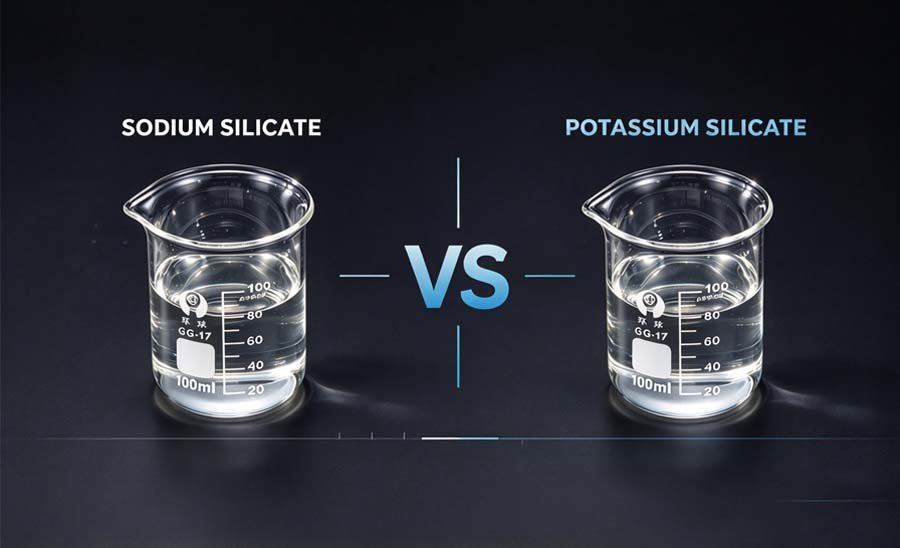
Potassium silicate inorganic binder systems are often chosen over sodium silicate where potassium-based chemistry, lower sodium content or a specific drying profile is preferred. Colloidal silica and organic resins serve different cost, performance and handling trade-offs; selection depends on the formulation target.
Frequently Asked Questions About Potassium Silicate Binder
1.What is potassium silicate binder?
A binding material based on soluble potassium silicate that bonds mineral particles and forms inorganic films on drying.
2.What is potassium silicate used as a binder for?
Coatings, paints, welding electrodes, refractory materials, foundry formulations and mineral-based construction systems.
3.Is potassium silicate an inorganic binder?
Yes. It is a mineral-based system that binds and films without organic polymers.
4.What industries use potassium silicate binders?
Coatings, paints, welding consumables, refractories, foundry and construction materials.
5.Can potassium silicate be used as a refractory binder?
Yes, in heat-resistant inorganic formulations where the dried silicate network provides thermal stability.
6.Can potassium silicate be used in welding electrodes?
Yes. It binds powder ingredients and provides green strength during extrusion and drying.
7.What is the difference between potassium silicate and sodium silicate binder?
Both are soluble silicates, but they differ in cation, drying behavior, solubility and film character; the choice depends on the formulation.
8.How does potassium silicate modulus affect binder performance?
Higher modulus increases reactivity toward silica and film hardness while reducing alkalinity; lower modulus gives slower, more alkaline behavior.
9.Can you customize potassium silicate binder grades?
Yes. Modulus, solids content and physical form can be customized.
10.What documents can you provide for potassium silicate binder?
TDS, SDS, COA and product specifications.